Do Green, Purple, and Black Olives Make Different Olive Oils?
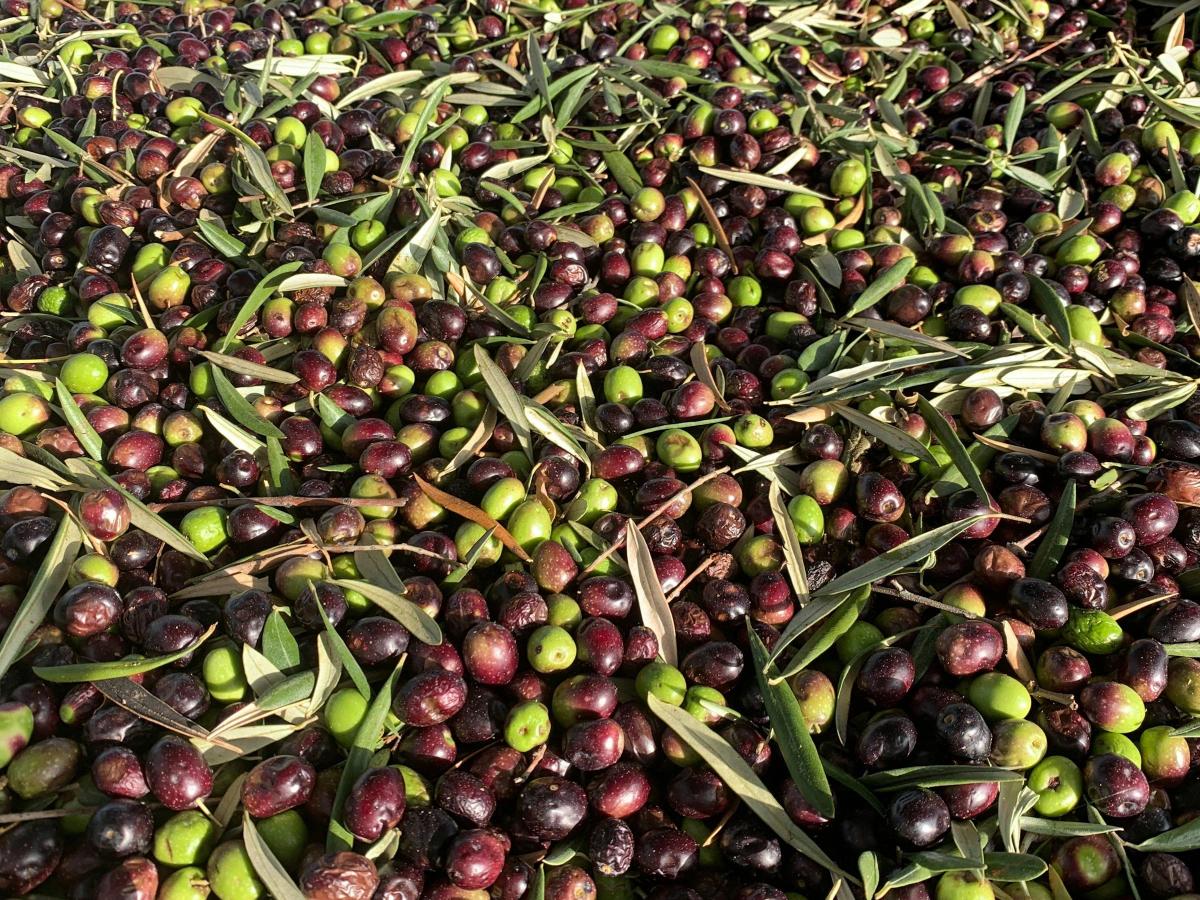
Olive oil begins long before the press. It starts on the tree, in the slow shift from green to purple to black. That change in color isn't decorative. It tracks the internal development of the fruit — how it protects itself early on, how it softens later, and how the chemistry inside gradually reorganises.
When you follow those changes, a lot about olive oil becomes clearer: why some oils carry a bite and others don't, why some stay fresh longer, why early harvest is harder to produce, and why polyphenols sit at the centre of quality.
TL;DR
- Olives move from green to purple, then black as they ripen.
- Polyphenols are highest early and fall as the fruit matures.
- As ripeness increases, fat and sugar rise; flavours soften; yields increase.
- High-polyphenol oils taste brighter, stay fresh longer, and retain more complexity.
- Early-harvest oils are costly because unripe olives produce very little oil.
- Late-harvest oils are abundant and dominate industrial blends.
Color = Ripeness
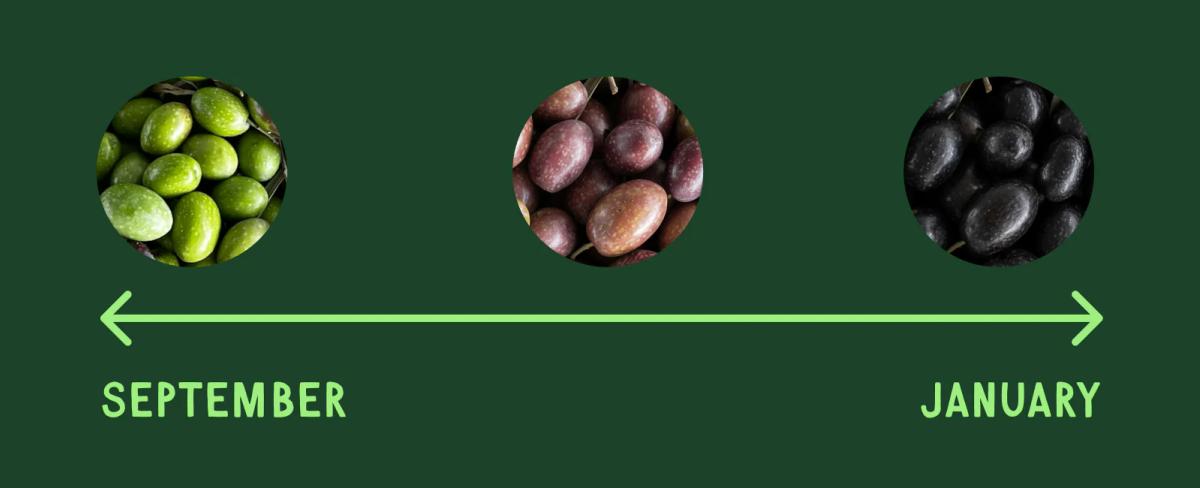
Walk into a grove in early autumn and you mostly find green olives — firm, dense, full of chlorophyll, and chemically defensive. As the season progresses, pigments shift. Greens take on purple tones. By winter, many olives deepen to black.
Color is simply the first thing you notice about a process that is happening on the inside.
Green olives belong to the beginning of the season: strong cell walls, high chlorophyll, high polyphenols.
Purple olives mark transition: softening tissues and a rebalancing of internal compounds.
Black olives are fully ripe: chlorophyll broken down, anthocyanins rising, sugars accumulating.
The color shift mirrors the underlying biochemical changes as the olive matures.
The biology of ripening: polyphenols, fat, and sugar
These internal changes appear most clearly in how polyphenols, fat, and sugar evolve over the season.
Polyphenols act as the fruit's early defence. Young olives are vulnerable — susceptible to microbes, insects, and oxidation — and high polyphenol content helps them withstand that pressure. That is why unripe green olives carry such high levels.
As the fruit matures, its role changes. Once the seed is formed, the tree no longer needs to protect the fruit as aggressively. Polyphenols drop. In their place, fat and sugar rise. The fruit softens and sweetens, becoming something birds and small mammals will actually eat. They take the flesh, carry the pit, and drop it somewhere else. That is how the tree spreads.
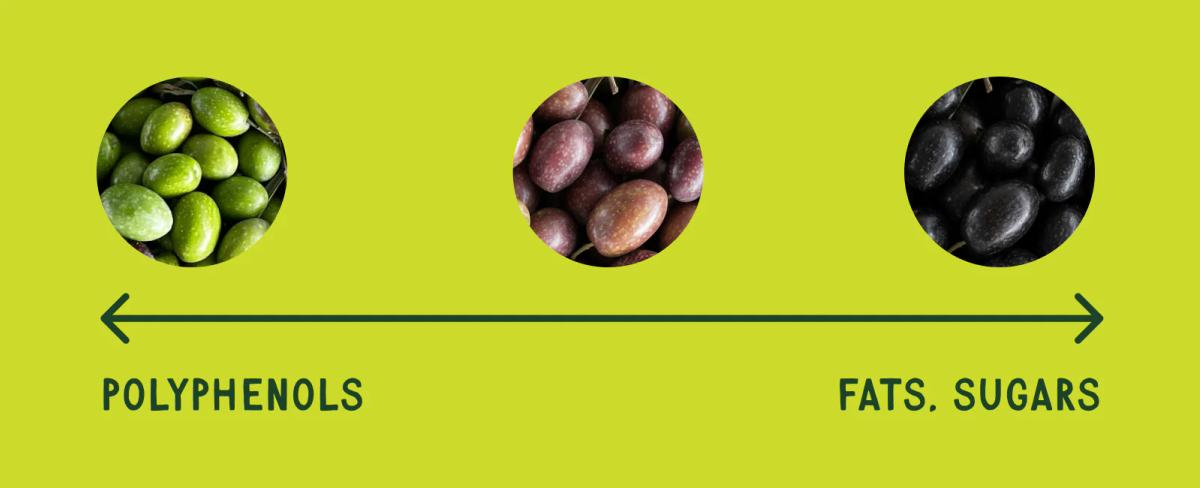
- Early: protect the fruit
- Late: make the fruit worth eating
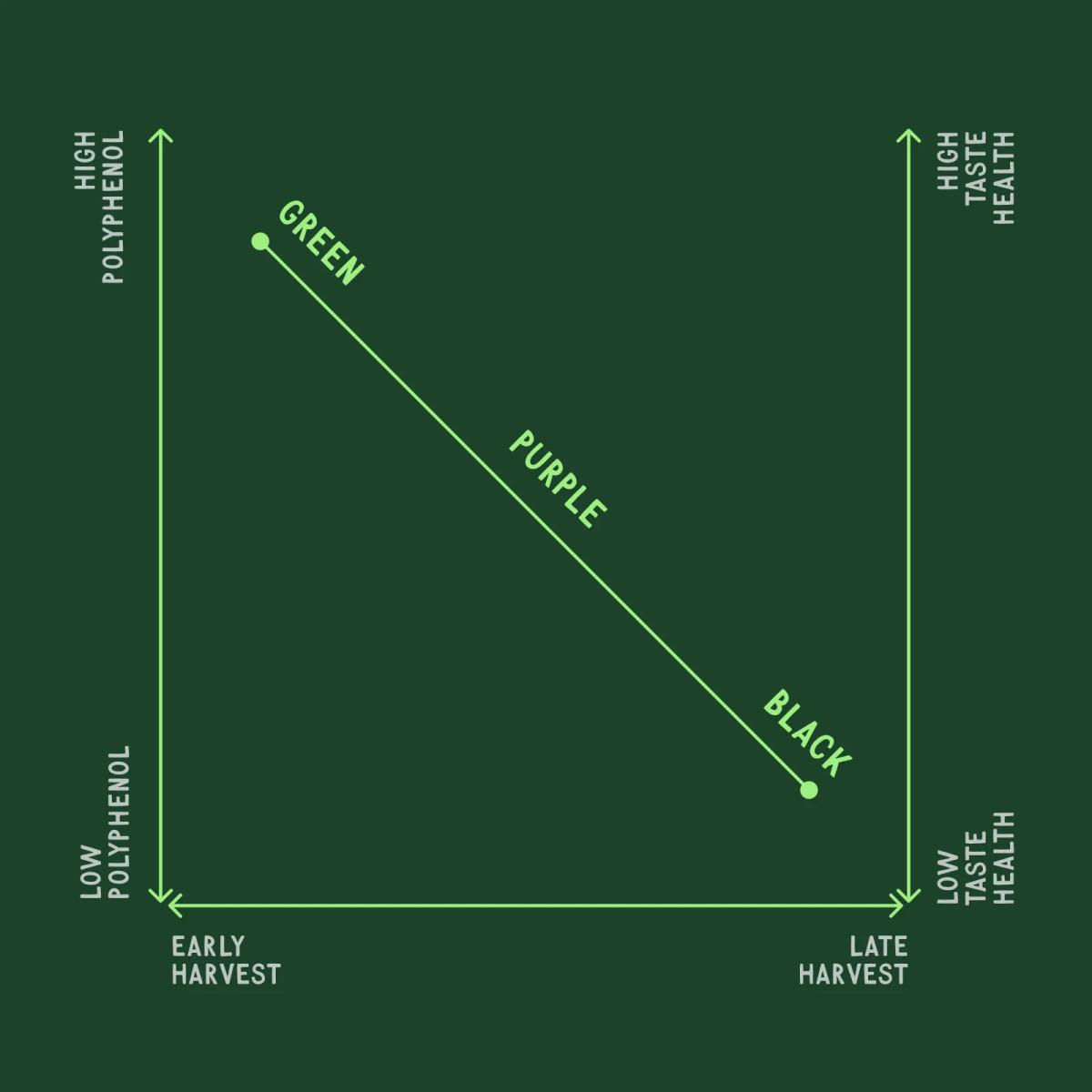
This shift — polyphenols down, fats and sugars up — explains most of the differences between early-, mid-, and late-harvest oils.
How polyphenols drive taste
This chemistry shows up directly in flavour.
Early-harvest oils carry high polyphenols, which give them their structure: the bitterness, the pepper at the back of the throat, the sense of freshness. These oils taste alive because the fruit was still in its defensive phase.
Mid-harvest oils, from purple olives, sit between intensity and softness. They keep some of the liveliness but lose the sharper edges.
Late-harvest oils, from black olives, are mild and easy. Bitterness fades. Pepper disappears. What remains is a simple, sometimes gently sweet flavour. Many people read this as "smooth" or "light," though it mostly reflects full ripeness and low polyphenols.
Taste follows the chemistry of the fruit as it develops.
Chemistry slows time
Polyphenols also determine how the oil behaves after pressing. These compounds slow oxidation. They keep the oil stable, preserve nutrients, and extend freshness.
High-polyphenol oils hold up better on the shelf because the antioxidants inside them keep working long after extraction. Lower-polyphenol oils still have nutritional value but carry less protective capacity. An oil from black olives will not stay fresh as long as one pressed early in the season.
Harvest economics
Unripe olives contain little fat. Pressing them yields surprisingly little oil. Producers often need several times more fruit to produce a litre of early-harvest oil. Ripe olives, rich in accumulated fat, release oil easily. The yield is high, the cost lower, and production scales naturally.
This is why early-harvest oils are scarce and more expensive, and why late-harvest oils dominate mass-market shelves. The economics mirror the biology.
Different oils play different roles
Because ripeness shapes chemistry, producers create different oils for different purposes:
| Harvest stage | Olive color | Best use |
|---|---|---|
| Early harvest | Green | Finishing oil — bright, intense, best over raw food |
| Mid harvest | Purple | Versatile — good for both finishing and cooking |
| Late harvest | Black | Gentle and neutral — ideal for cooking or blending |
Color → chemistry → taste → use.
The blind spot in olive oil
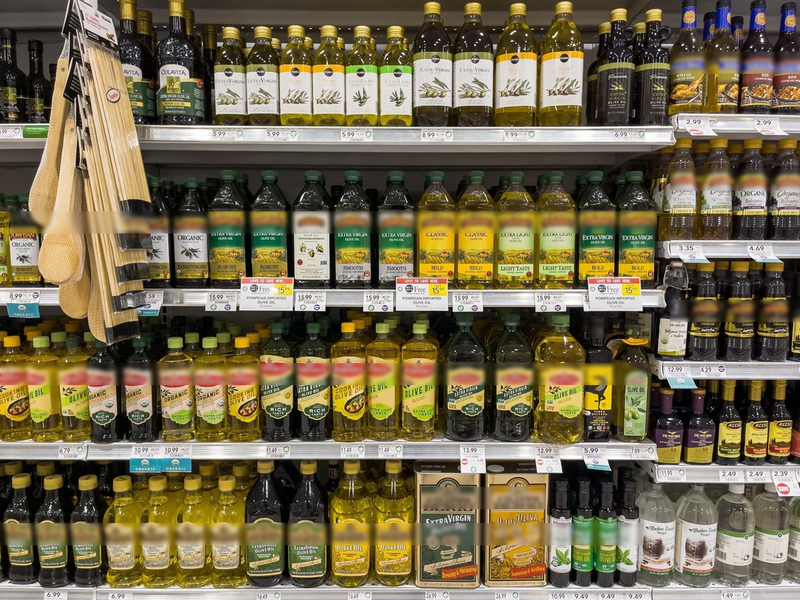
Most supermarket oils don't mention ripeness, harvest timing, or polyphenol values. Labels rarely disclose whether an oil was pressed early or late, or whether it blends oils from different seasons or different years.
Late-harvest oils are cheaper and more abundant, and blending them with older stock increases consistency. But doing so lowers flavour, lowers polyphenols, and shortens shelf life.
Without transparency, there is no way for consumers to know what they are actually buying.
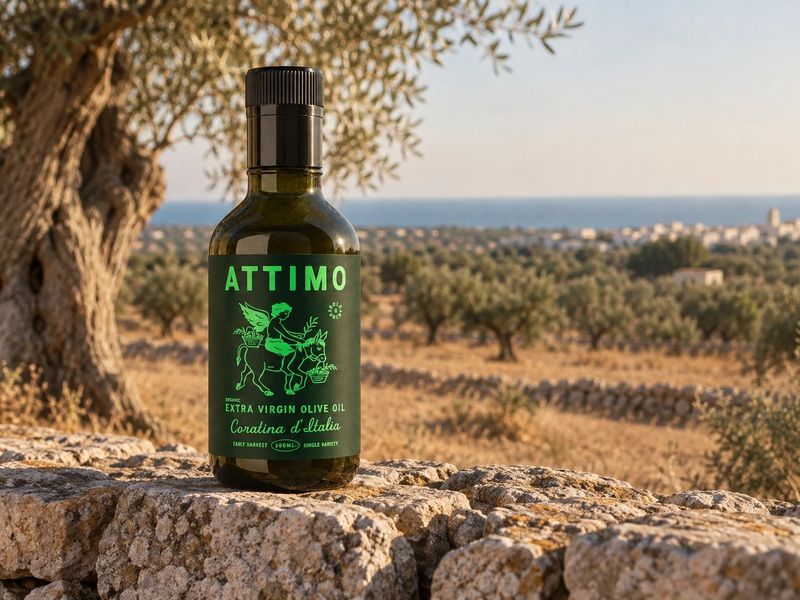
ATTIMO and polyphenols
Polyphenols are a direct driver of taste, freshness, and how the oil will hold up over time.
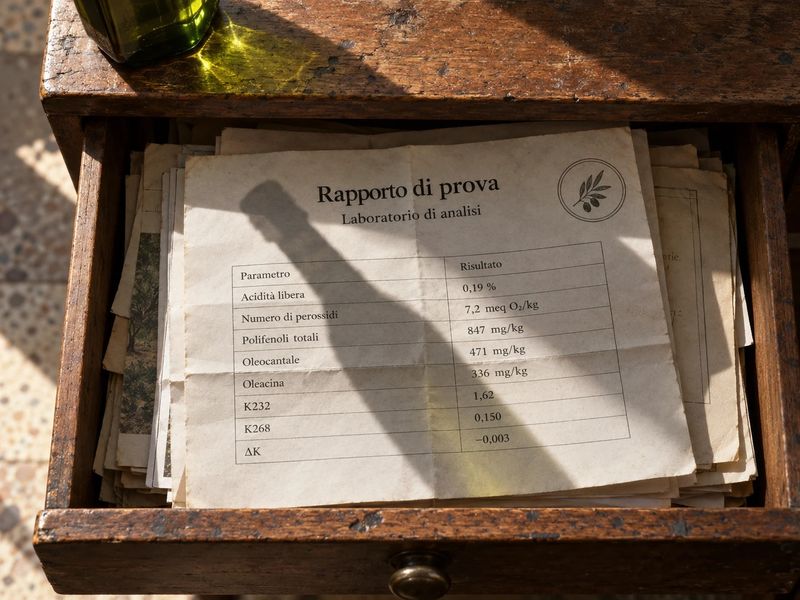
Every ATTIMO oil comes with independent lab results showing polyphenol levels, acidity, peroxides, and oleic acid. No blends, no masked harvests, no recycled batches. Each release comes from a specific grove, a specific harvest, and a specific analysis you can verify yourself.
FAQ
Do green, purple, and black olives produce oils of different colors?
Yes. Early-harvest oils (green olives) are a deeper green — high chlorophyll, high polyphenols. Mid-harvest oils (purple olives) are lighter, golden-green. Late-harvest oils (black olives) are golden or pale — low chlorophyll, low polyphenols, high fat.
Are green olives healthier than black ones?
Not as whole fruit. But oils pressed from unripe green olives carry higher polyphenols and therefore stronger antioxidant properties.
Why does early-harvest oil taste bitter or spicy?
Because it is rich in polyphenols such as oleocanthal and oleacein, which naturally produce bitterness and pepper.
Does high-polyphenol olive oil last longer?
Yes. Polyphenols slow oxidation, which keeps the oil fresh for longer.
What's the best harvest time?
It depends on what you want: intensity and antioxidants → early harvest. Balance → mid harvest. Mild flavour and high yield → late harvest. For freshness and complexity, early harvest usually offers the strongest profile.