High-Polyphenol Olive Oil: Benefits & How to Choose
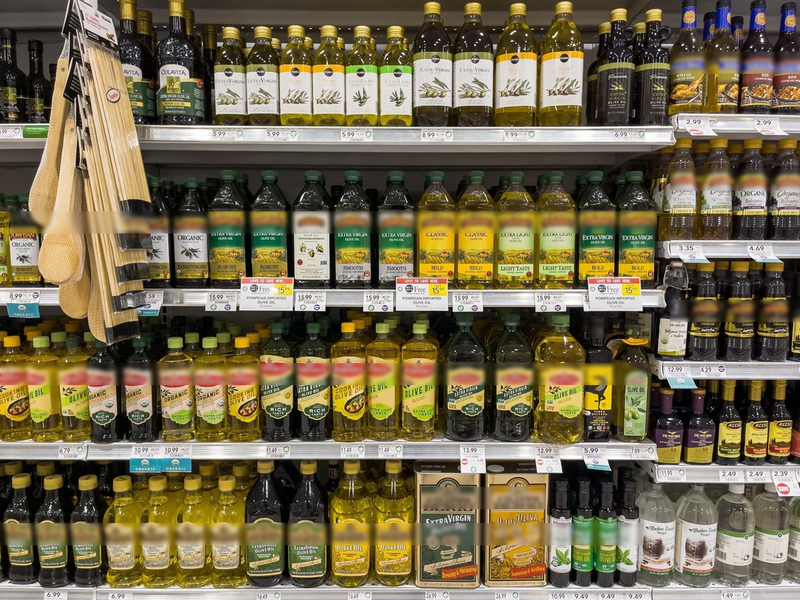
Most people meet olive oil as a commodity — a tall tin on a supermarket shelf, bought on price, used to stop things sticking to a pan. High-polyphenol olive oil is a different product entirely. Same fruit, same species, but selected and made so that the compounds responsible for olive oil's flavour and its health reputation survive all the way into the bottle.
This guide explains what "high-polyphenol" actually means, how those polyphenols get into the oil (and how they quietly leave), which compounds matter, how much an oil should contain, what the research genuinely supports, and how to buy and use one without getting fooled. If you just want to skip to a lab-tested range, start with our high-polyphenol olive oil collection — but the rest of this page is here so you can judge any oil, not just ours.
TL;DR
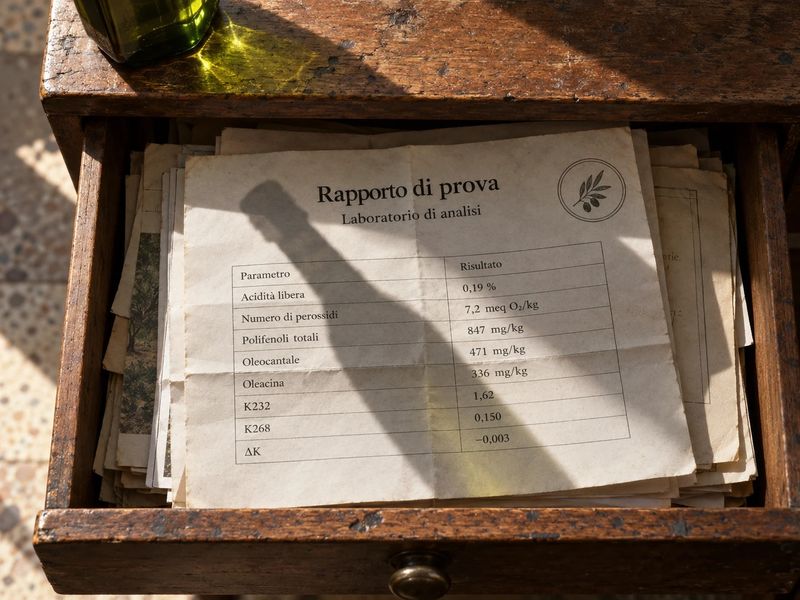
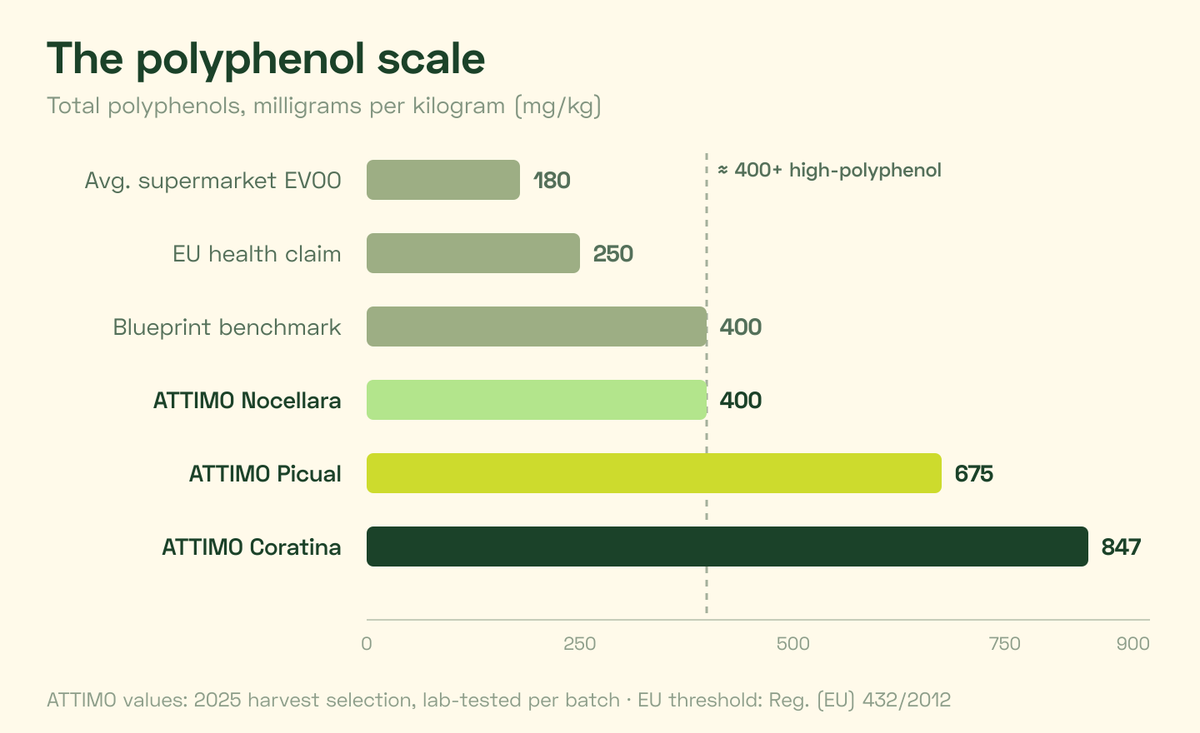
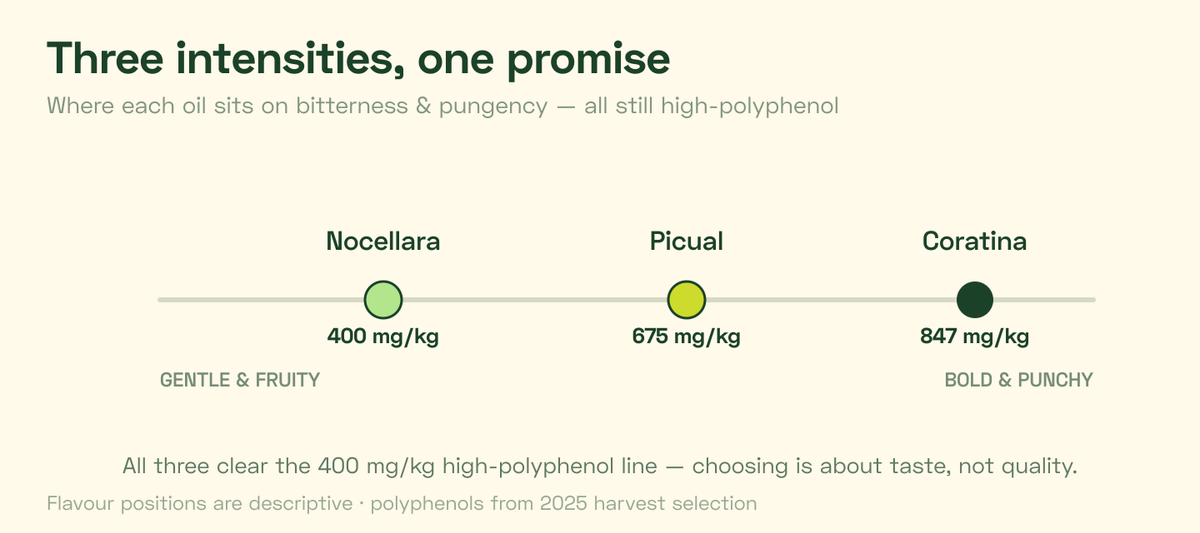
High-polyphenol olive oil is extra virgin oil made and bottled to hold onto its polyphenols — the antioxidant compounds behind both its peppery taste and its health benefits. A typical supermarket "extra virgin" carries roughly 120–210 mg/kg; a genuinely high-polyphenol oil runs 400–900 mg/kg (ATTIMO's 2025 harvest: Coratina 847, Picual 675, Nocellara 400). That level comes down to four things — variety, early harvest, fast cold pressing, and freshness — and it only counts if there's a lab number behind it.
What "high-polyphenol" really means
Polyphenols are a large family of natural compounds the olive tree produces to defend its fruit — against pests, UV light and oxidation. When olives are pressed, a fraction of those compounds carries over into the oil. They are antioxidants, and they are also what makes a fresh oil taste bitter and peppery.
"High-polyphenol" has no single legal definition, which is exactly why the term gets abused. In practice, the useful reference points are measured in milligrams per kilogram (mg/kg):
- ~120–210 mg/kg — a typical supermarket "extra virgin" oil.
- 250 mg/kg — the threshold the EU set for a formal health claim (more on that below).
- 400 mg/kg — roughly where most people agree "high-polyphenol" begins.
- 400–900 mg/kg — the range a carefully made, early-harvest, single-variety oil can reach.
So a genuinely high-polyphenol oil isn't marginally better than the supermarket bottle. It can carry three to five times the polyphenol content. That gap is the whole point.
How polyphenols get into the oil — and how they leave
Polyphenol content is not luck. It's the sum of a handful of decisions, each of which can add or destroy a large share of the final number.
- Variety. Some olive cultivars are simply built to produce more. Coratina (from Puglia) and Picual (from Spain) are among the most polyphenol-rich varieties in the world; a gentle variety like Nocellara starts lower by nature. This is why single-variety oils are easier to make predictably high — you're not averaging a strong olive against a weak one.
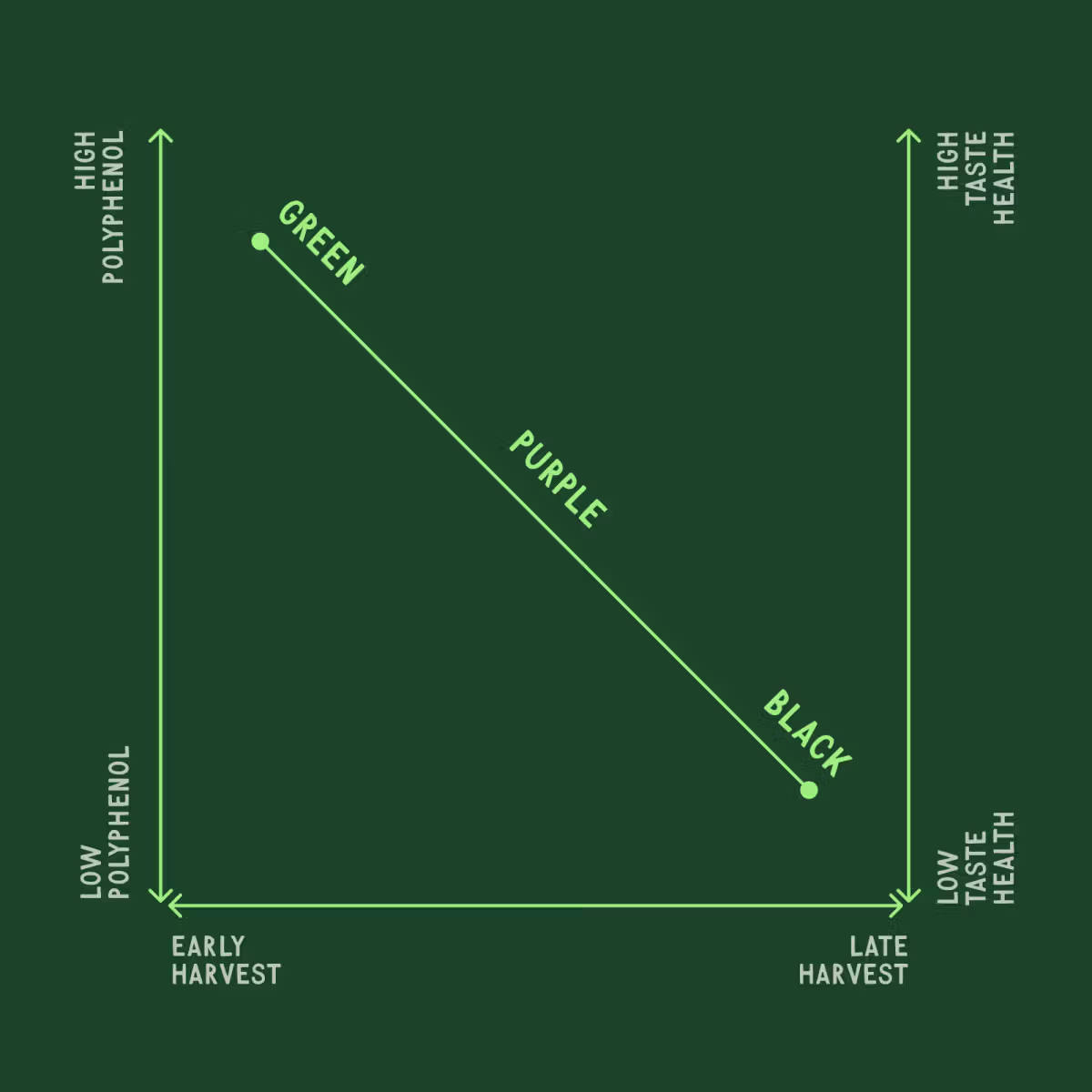
- Harvest timing. Polyphenols peak when olives are young, green and unripe, then fall as the fruit ripens to black. Early-harvest oil sacrifices yield (green olives give less oil) for concentration. Late harvest does the opposite. This single choice can halve or double the number.
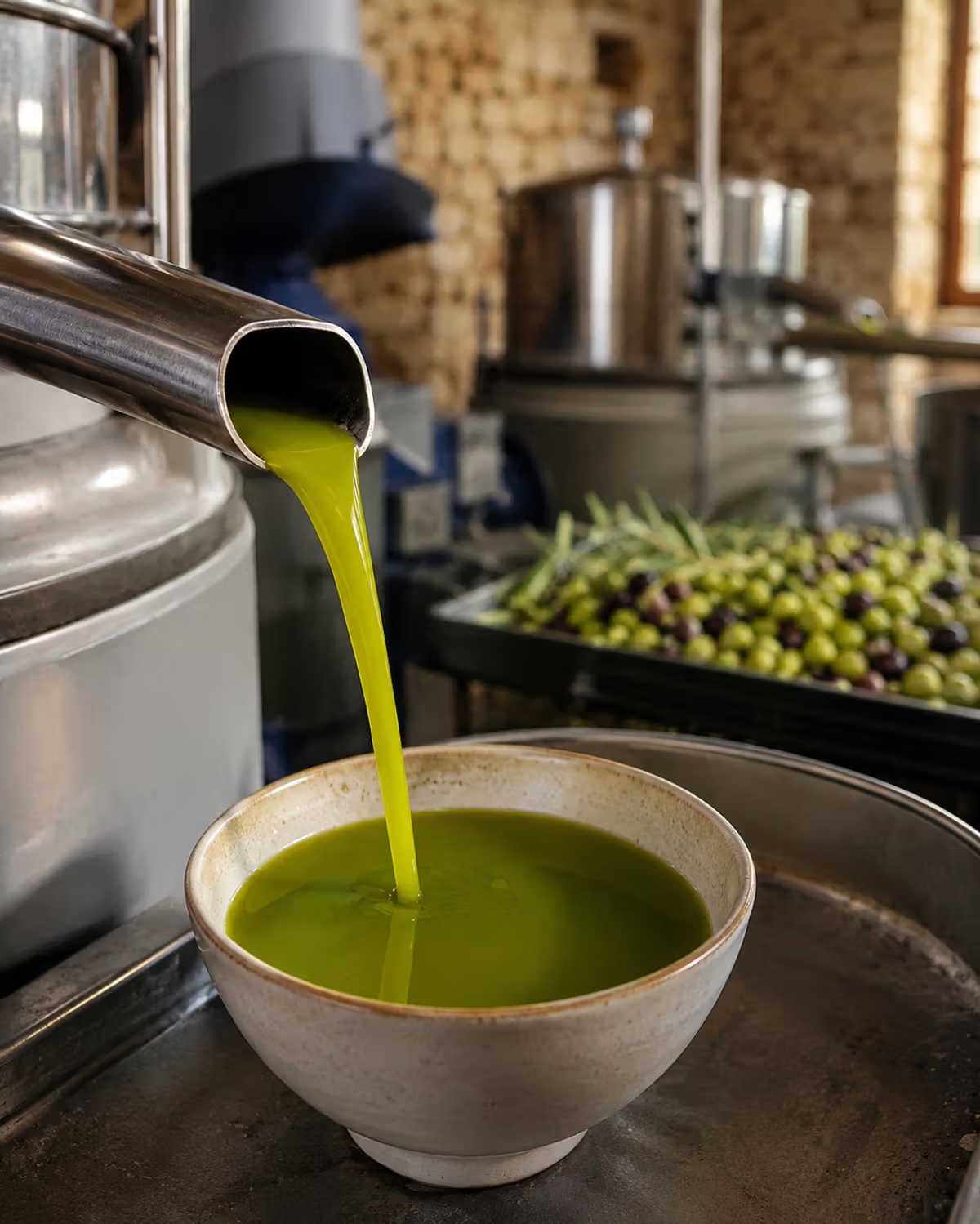
- Speed and temperature of pressing. Once picked, an olive starts to degrade. The best oils are cold-extracted within hours of harvest. Heat and delay both strip polyphenols before the oil is even bottled.
- Freshness after bottling. Polyphenols are consumed over time as the oil oxidises. A high-polyphenol oil is a perishable product — closer to fresh juice than to a pantry staple. The number on the lab report is a snapshot at pressing; it only falls from there.
- Light, heat and oxygen in storage. The same forces that age the oil in a warehouse age it in your kitchen. Clear bottles on a sunny shelf are working against you.
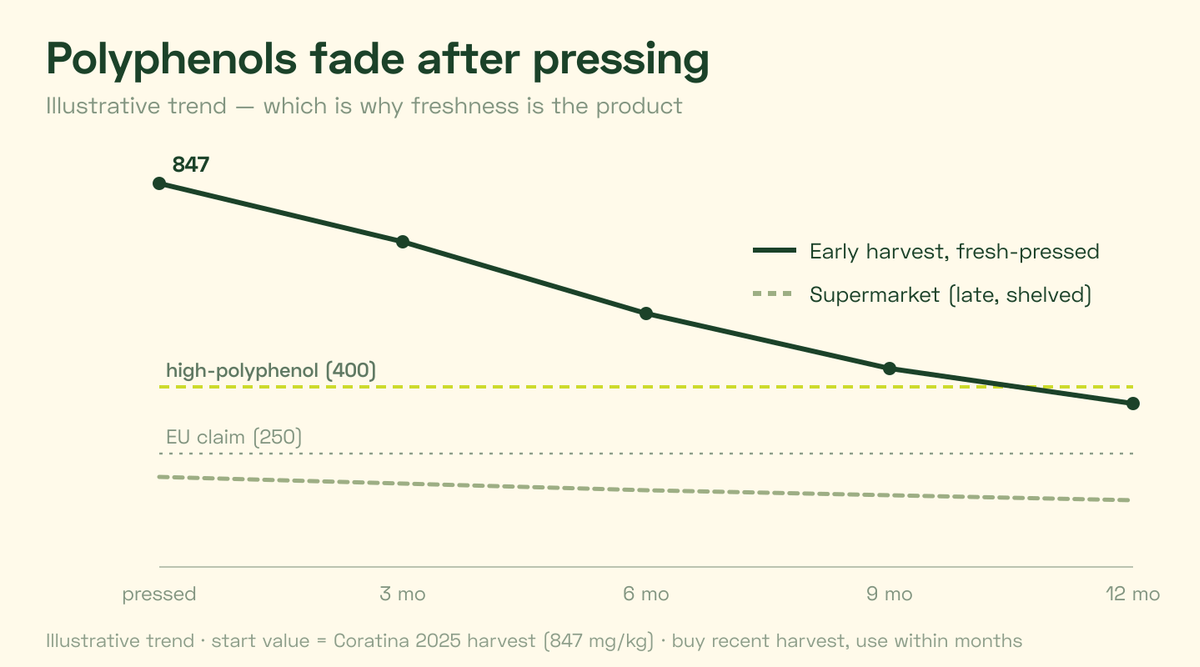
Industrial oil tends to lose on every one of these: blended across varieties and harvests for a cheap, consistent taste, often pressed late and slowly, then shipped and shelved for a year. That's why "extra virgin" on the label tells you almost nothing about polyphenols — and why so much of it tests low. (In UC Davis testing, 69% of sampled imported "extra virgin" oils failed international extra-virgin standards in the first place.)
The compounds that matter
"Polyphenols" is an umbrella over dozens of molecules. A few do most of the work, and a good lab report breaks them out individually rather than giving you one lumped figure.
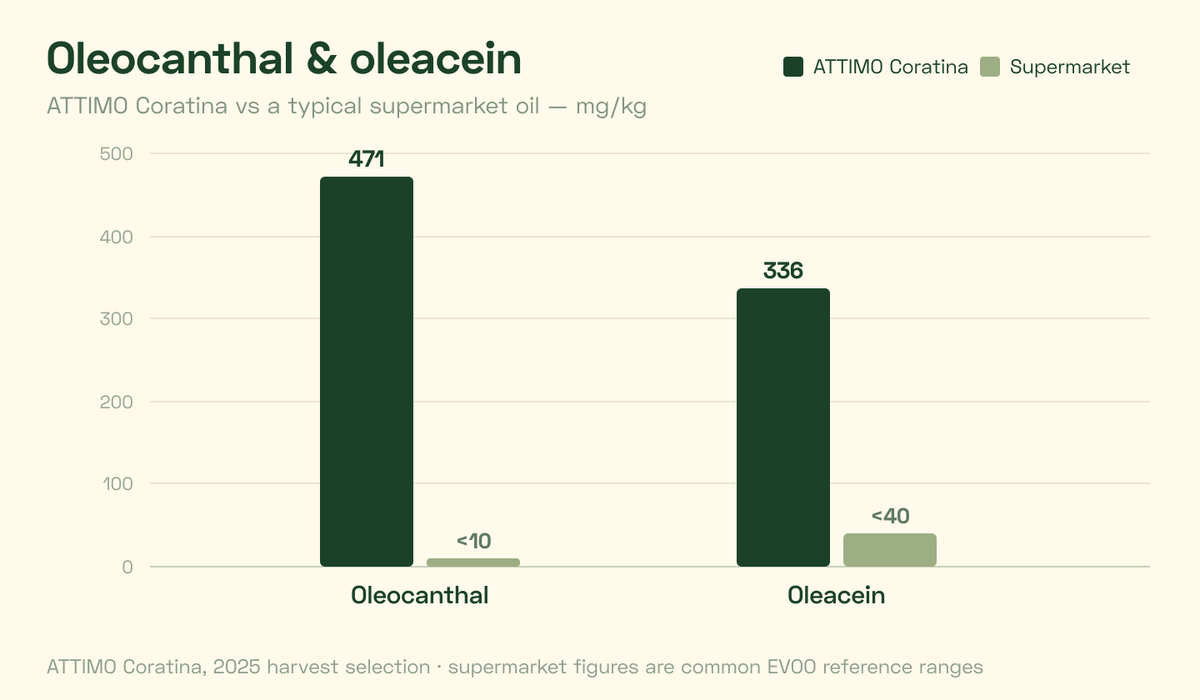
- Oleocanthal — the source of the peppery sting at the back of your throat. Famously, it inhibits the same COX-1 and COX-2 enzymes as ibuprofen. Our Coratina measures 471 mg/kg of it; a typical supermarket oil is below 10.
- Oleacein — a powerful antioxidant studied for blood-pressure and cardiovascular effects. Coratina measures 336 mg/kg here.
- Hydroxytyrosol (and its precursor oleuropein, plus tyrosol) — among the most-studied olive antioxidants, and the exact compounds the EU health claim is written around.
If you want to learn to read these numbers off a real certificate, we wrote a full walkthrough: how to read an olive oil lab analysis. And for the chemistry in more depth, see our polyphenols in olive oil explainer.
How many polyphenols should olive oil have?
Put the milestones on one scale and the answer gets concrete:
- ~180 mg/kg — the average supermarket extra virgin. Technically olive oil; barely a source of polyphenols.
- 250 mg/kg — the EU's line for a health claim. This number isn't arbitrary: it comes from the requirement of at least 5 mg of hydroxytyrosol and its derivatives per 20 g of oil, set out in Commission Regulation (EU) No 432/2012. Below it, a producer legally cannot make the claim.
- 400 mg/kg — the level of the well-known Blueprint oil popularised by Bryan Johnson, and a reasonable floor for calling an oil "high-polyphenol."
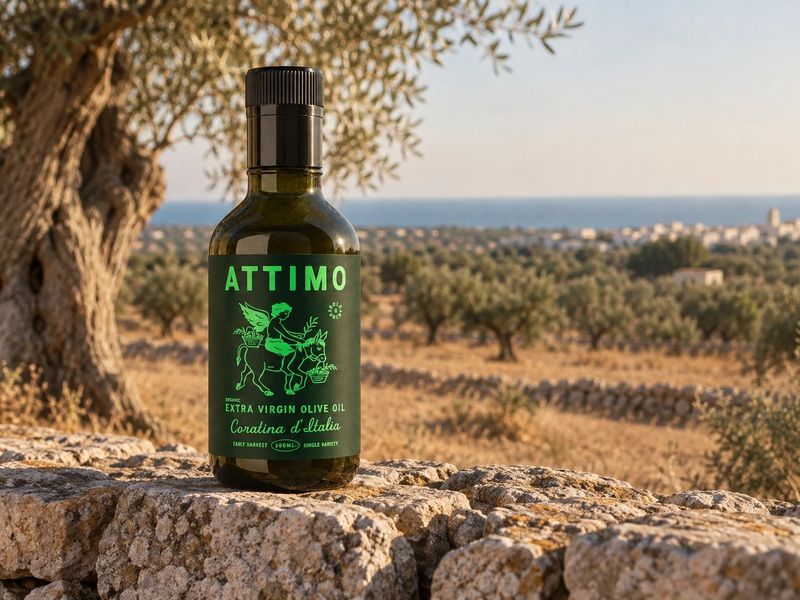
- 400–900 mg/kg — where early-harvest, single-variety oils land. ATTIMO's range sits here: Coratina at 847, Picual at 675, Nocellara at 400 (2025 harvest selection — we re-test and update these every harvest, so the latest bottle may differ).
A simple rule: if an oil doesn't put a number on the label or a lab report, assume it's near the bottom of this scale. High-polyphenol producers measure, because the number is the product.
What the research says
This is where honesty matters, because olive oil attracts more wellness hype than almost any food. Three findings are worth knowing, each from a primary source rather than a supplement brand:
- Protection of blood lipids. The one olive-oil health benefit the EU has formally approved is that its polyphenols help protect blood lipids (LDL cholesterol) from oxidative damage — granted only to oils above that 250 mg/kg threshold (EFSA / Reg. 432/2012).
- Anti-inflammatory activity. In a 2005 study published in Nature, oleocanthal was shown to inhibit the same COX enzymes as ibuprofen. Roughly 50 g of a high-oleocanthal oil delivers about a tenth of an ibuprofen dose (Beauchamp et al., Nature, 2005). It is not a painkiller — it's a small, daily anti-inflammatory input.
- Cardiovascular outcomes. In the PREDIMED trial, a Mediterranean diet rich in extra virgin olive oil (~50 ml/day) was associated with about 30% fewer major cardiovascular events in high-risk adults than a low-fat diet (Estruch et al., NEJM, 2018 republication).
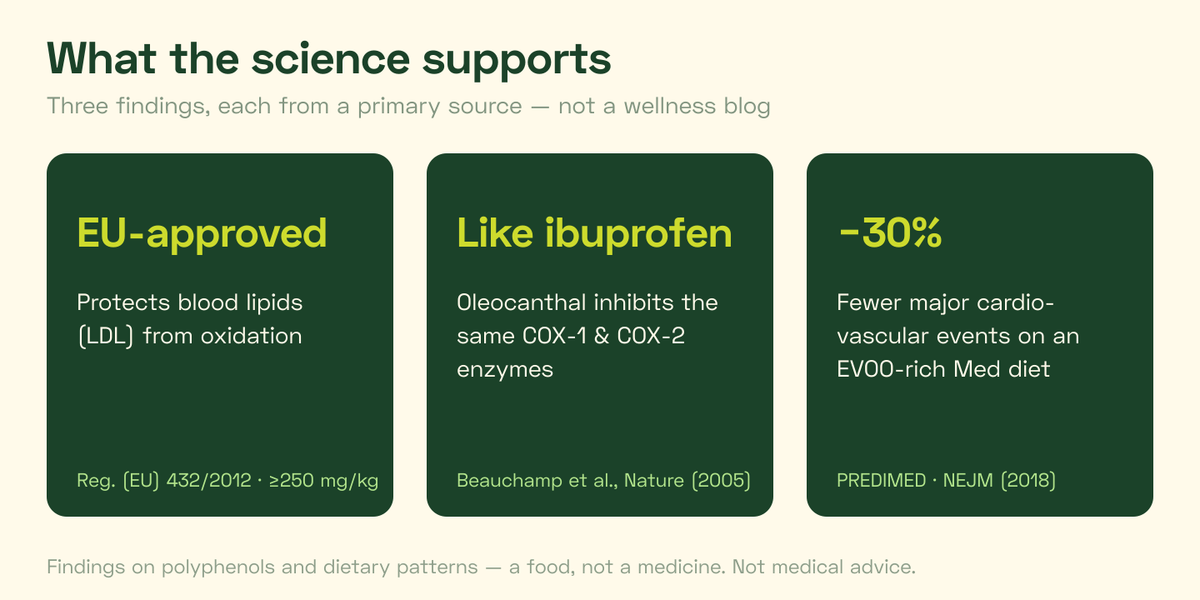
A necessary caveat: olive oil is a food, not a medicine. These are findings about polyphenols and dietary patterns, not promises about any individual. Treat them as reasons a polyphenol-rich oil is worth choosing over a depleted one — not as medical advice.
How polyphenols change the taste
Here's the part most people aren't told: flavour and health come from the same molecules. The bitterness on the tongue and the pepper that catches in your throat are the polyphenols. An oil that tastes completely smooth and buttery is usually an oil that's low in them.
This trips up first-timers, who have only ever tasted mild, aged supermarket oil and assume the bitterness of a fresh high-polyphenol oil is a fault. It isn't. A bold Coratina will make you cough slightly on the first spoon — that cough is oleocanthal. A gentler Nocellara softens the effect while still clearing the high-polyphenol bar. Choosing between them is a taste decision, not a quality one.
How to buy a genuinely high-polyphenol olive oil
A checklist you can apply to any brand, not just ours:
- A polyphenol number, ideally with a lab report. No measured figure, no claim. Serious producers publish a Certificate of Analysis.
- A harvest date, not just a best-before. Polyphenols fall with age. You want the most recent harvest, and you want to know when that was.
- A named single variety and origin. Blends average strong and weak olives and hide late-harvest fruit; single-variety oils are far easier to make reliably high.
- Early harvest stated explicitly. "Early harvest" or "green harvest" is the single biggest lever on the final number.
- Dark glass or tin. Packaging that protects the oil from light tells you the producer understands it's perishable.
If an oil checks those boxes, the high-polyphenol claim is probably real. If it leans on words like "premium" and "artisan" with no number, assume it's marketing.
How to use and store it
- Use it raw or as a finish. Polyphenols and oleocanthal degrade with prolonged high heat. You can absolutely cook with a high-polyphenol oil, but you'll get the most from it drizzled over food after cooking — on salads, soups, grilled vegetables, fish, bread.
- The "olive oil shot." Many people take a spoonful neat each morning, specifically for the polyphenol hit. With a high-oleocanthal oil this is a genuine thing, not a fad — see our piece on the olive oil shot.
- Store it cool and dark, and open it sooner rather than later. Keep it away from the stove and out of sunlight. Once opened, use it within a couple of months while the numbers are still high. Treat a great oil like fresh produce, because that's what it is.
How polyphenols are measured (and why numbers don't always compare)
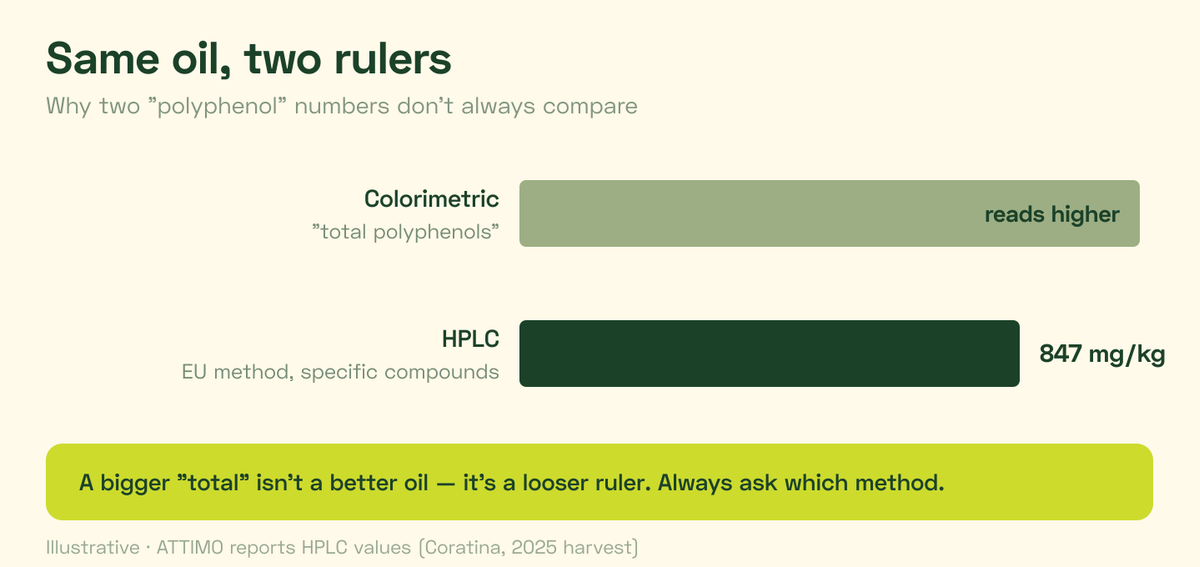
One caution when comparing brands: not every "polyphenol" number is measured the same way. The EU-standard method uses HPLC to quantify specific phenolic compounds. Some producers report "total polyphenols" using broader colorimetric methods that sweep in compounds with less documented activity, producing higher-sounding numbers that aren't directly comparable. This is why a transparent producer shows you the method and breaks out individual compounds — oleocanthal, oleacein, hydroxytyrosol — rather than one inflated total. Again, the lab-report guide walks through this in detail.
Frequently asked questions
Is high-polyphenol olive oil the same as extra virgin?
All high-polyphenol oils are extra virgin, but very few extra virgin oils are high-polyphenol. "Extra virgin" is a grade based on acidity and sensory defects; it says nothing about polyphenol content.
Does a higher number always mean a better oil?
For health, more is generally better. For taste, it depends — a very high-polyphenol oil is intensely bitter and peppery, which suits some dishes and palates more than others. Pick the intensity you'll actually enjoy using.
Will cooking destroy the polyphenols?
Some, with prolonged high heat. A high-polyphenol oil is robust enough to cook with, but you capture the most benefit using it raw or added at the end.
How long does a high-polyphenol oil stay high?
Polyphenols decline steadily from the moment of pressing. Buy the latest harvest, store it dark and cool, and use it within a few months of opening.
Where to start
If you want an oil that's actually been measured, our high-polyphenol olive oil range is single-variety, early-harvest and lab-tested at 400–900 mg/kg — Coratina, Picual and Nocellara, each with its full report published. Or, if you're not sure which intensity suits you, the difference between them is flavour, not quality: start bold with Coratina, balanced with Picual, or gentle with Nocellara.