Bryan Johnson's Olive Oil: An Evidence-Based Review and What To Buy In Europe
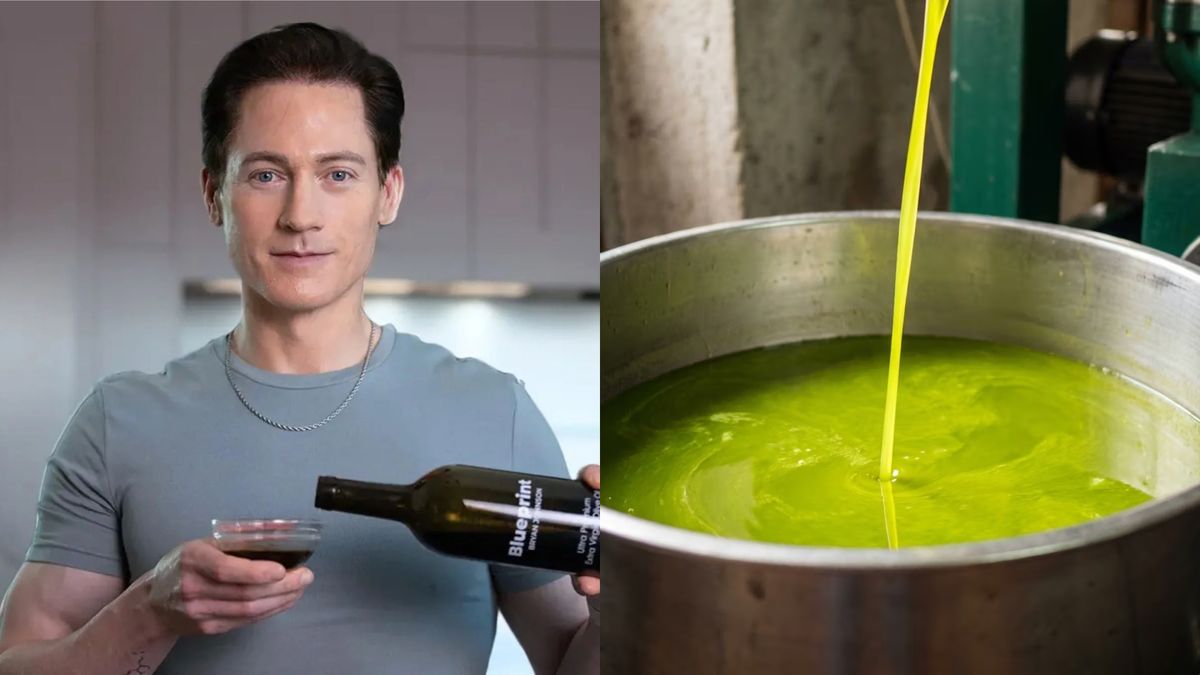
Bryan Johnson calls extra virgin olive oil his number one anti-aging food.
The “most measured person in human history" now spends roughly $2 million a year attempting to slow and reverse his own biological age through the Blueprint protocol: a data-driven regimen of diet, supplements, sleep, and continuous biomarker monitoring. He is the subject of a Netflix documentary titled Don't Die: The Man Who Wants to Live Forever. His singular stated goal, taken without irony, is not to die.
Within that protocol, olive oil occupies an unusual position. Not as a cooking ingredient but as a daily precision intervention.
This post covers:
- What the Blueprint protocol says about olive oil and why
- Johnson's exact quality criteria and what each one means scientifically
- What Blueprint olive oil is, and what it isn’t
- Why the economics don't work for most European buyers
- How to evaluate any oil against Johnson's standards
TL;DR
- Johnson consumes 3 tablespoons of high-polyphenol EVOO daily as part of the Blueprint protocol, treating it as a supplement rather than a cooking ingredient
- His published criteria: polyphenols >400 mg/kg, oleic acid >67%, peroxide value <9 meq/kg, FFA <0.3%, DAGs >90%, third-party lab tested, harvested within 12 months
- Blueprint olive oil is sourced from Portugal, meets his minimum polyphenol threshold, but discloses neither the olive variety nor the farm
- For European buyers, the landed cost including international shipping makes it a poor value proposition when comparable or superior oils are produced domestically
- The criteria themselves are sound and worth using as a purchasing framework regardless of where you buy
Why olive oil specifically
He has said so directly:
And in more detail:
Johnson's protocol is structured around measurable biological outcomes, and olive oil's place in it rests on a substantial evidence base. The PREDIMED trial — over 7,000 participants — found that a Mediterranean diet supplemented with extra virgin olive oil significantly reduced the incidence of major cardiovascular events.
What Johnson's protocol adds is specificity: not all EVOO delivers these benefits equally. The active compounds — primarily oleocanthal and oleacein — vary enormously depending on variety, harvest timing, and processing. A supermarket oil and a well-made early-harvest single-variety oil can share the same grade designation with a fivefold difference in what actually matters.
His criteria, explained
Johnson has published specific thresholds for the oil he uses. These are not arbitrary: each one maps to a measurable quality indicator.
Polyphenols > 400 mg/kg
The minimum threshold to ensure meaningful anti-inflammatory and antioxidant activity. The EU health claim for olive oil requires 250 mg/kg — Johnson's floor is set 60% above that. Most supermarket oils measure below 200 mg/kg. Above 400 mg/kg, you're in early-harvest territory from varieties with naturally high phenolic content.
Oleic acid > 67-72%
Oleic acid is the dominant monounsaturated fat in olive oil and contributes to cardiovascular protection and oxidative stability. Higher oleic acid means the oil is more resistant to degradation over time and under mild heat.
Peroxide value < 9 meq/kg
Peroxide value measures oxidation. A low peroxide value confirms the oil is fresh and hasn't been compromised by light, air, or heat during storage or transport. The official EVOO limit is 20 meq/kg — Johnson's threshold is less than half that.
Free fatty acids < 0.3%
Free fatty acid content indicates how intact the olive fruit was at harvest and how quickly it was processed. High FFA signals damaged fruit, delayed processing, or poor handling. Under 0.3% is characteristic of high-quality, promptly processed early-harvest fruit.
Diacylglycerols > 90%
DAG ratio is a freshness marker that degrades predictably over time. Above 90% indicates recent harvest and minimal oxidative degradation. It's one of the most reliable indicators of genuine freshness.
Harvested within the last 12 months, UV-protective glass, third-party lab tested
Self-explanatory and consistent with basic quality practice for any serious EVOO producer.
These criteria, taken together, describe an early-harvest, cold-pressed, single-origin oil with verified freshness markers and independently confirmed polyphenol content. That's a reasonable definition of a quality premium EVOO. It's not a proprietary standard — it's just what good olive oil looks like when you measure it. Several of the label terms buyers lean on instead carry no information at all — we took those apart in 25 olive oil myths.
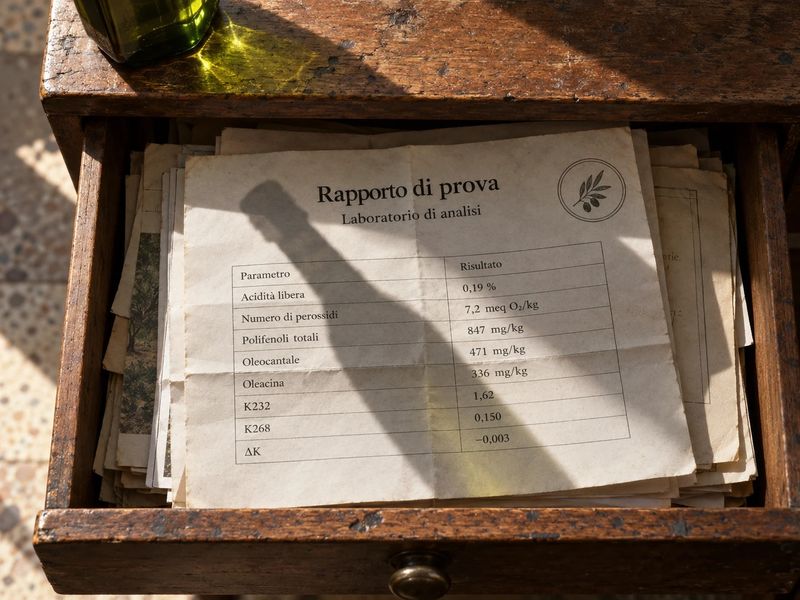
Johnson's criteria stop at total polyphenol content. That's a reasonable minimum threshold, but the compounds that drive most of the health research are more specific. The two that matter most are oleocanthal (which inhibits the same enzymes as ibuprofen) and oleacein, one of the most potent antioxidants in the olive phenolic family. A high total polyphenol figure doesn't guarantee either in meaningful concentrations. The only way to know is a COA that breaks them out individually. For example, Attimo Coratina measures 471 mg/kg oleocanthal and 336 mg/kg oleacein. Johnson doesn't publish compound-level breakdowns for Blueprint oil.
If you want to understand what oleocanthal and oleacein are, what the research shows, and why they're worth looking for on a COA, check out this more thorough breakdown of polyphenols in olive oil.
What Blueprint olive oil is
Blueprint's EVOO is sourced from Portugal, single-origin, third-party tested, UV-protective glass bottle. Johnson publishes Certificates of Analysis per batch. He has stated this directly:
The current certificate of analysis shows 425 mg/kg total biophenols by HPLC for the November 2025 harvest, oleic acid above 67%, FFA below 0.3%.
One thing it doesn't disclose: the olive variety. The product page says olives from Portugal, with no cultivar name and no farm or mill identified. For a protocol built on radical transparency and measurability, this is a notable gap.
Top-tier EVOOs typically name the variety and the grove because variety determines flavour character, polyphenol potential, and what you're actually consuming. A Portuguese blend of undisclosed cultivars potentially changing between harvests is harder to track over time than a named single-variety oil.
The other notable fact: Blueprint oil is not organically certified, despite the premium positioning.
The European buyer's calculation
Blueprint olive oil retails at $35 for 750ml.
For a European buyer consuming the recommended 1.5-3 tablespoons daily, that's roughly one bottle every two to four weeks. Add international shipping from the US, and the landed cost rises significantly. Import duties apply depending on country. Delivery times vary.
The economics make considerably less sense when European-produced oils meeting or exceeding the same criteria are available with no import cost, shorter supply chains, and fresher oil by the time it reaches you. Europe is where most of the world's high-polyphenol EVOO is produced. Buying from the source is the better option.
Running Johnson's criteria against Attimo's Coratina
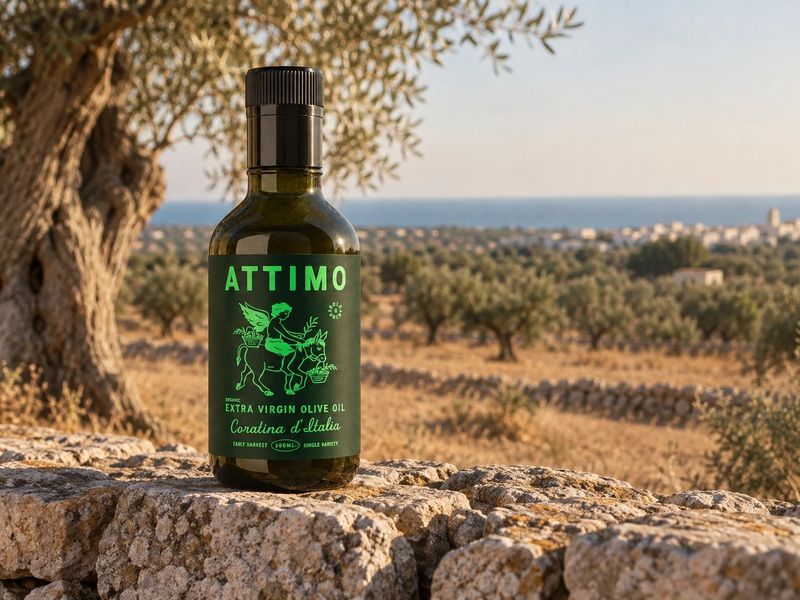
Attimo's 2025/26 Coratina is tested by Chemiservice, Monopoli — an ISO/IEC 17025 accredited laboratory recognised by the International Olive Council. At 847 mg/kg total biophenols, it's more than double Johnson's stated minimum. Free acidity: 0.19%. Peroxide value: 7.2 meq/kg. Full pesticide screen clean across 300+ substances. Certified organic. Named single variety. Named harvest date: October/November 2025.
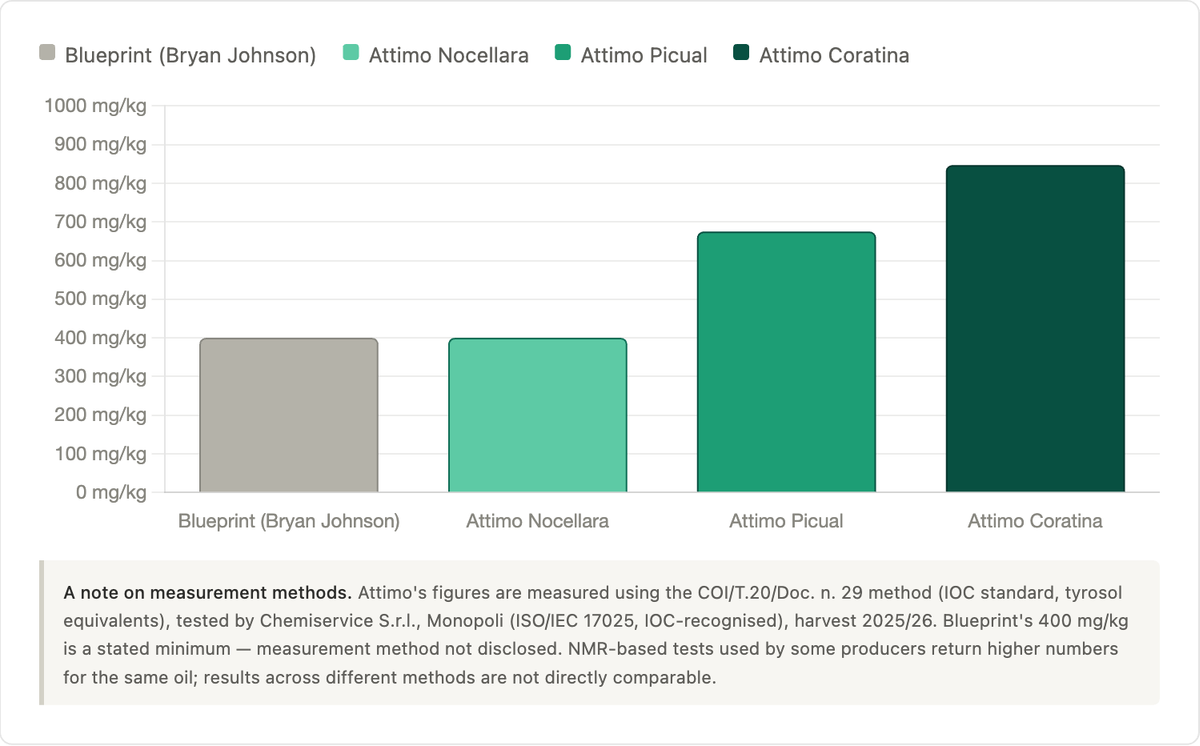
It also carries two quality markers Blueprint oil doesn't: named single variety and organic certification.
What to look for shopping for Blueprint alternatives
Polyphenol content with a COA
A stated number with no documentation is not evidence. Look for a named lab, a recognisable method (HPLC or COI-standard biophenol method), and a number above 400 mg/kg. Above 600 is strong. Above 800 is exceptional.
Harvest date on the label
Not best-before date — harvest date. Polyphenols degrade continuously. A best-before date tells you nothing about how old the oil was when it was bottled.
Named variety
Variety determines polyphenol potential. Coratina, Koroneiki, Picual, and Moraiolo are among the highest-phenol cultivars. Unlabelled blends or generic regional designations obscure this.
Low FFA and peroxide values
Confirms freshness and careful handling. Both should be on the COA.
Source country proximity
For a European buyer, European oils arrive faster, fresher, and without import cost. The Mediterranean basin is where these oils are made. Buy from it.
The evidence-based verdict
Blueprint olive oil is a legitimate product. Johnson's criteria are well-chosen and grounded in the relevant science. Publishing Certificates of Analysis per batch is rarer than it should be in this industry, and worth credit.
But for a European buyer, it's a geographically and economically awkward choice. You're paying a premium for import logistics on a product whose origin variety is undisclosed, whose polyphenol content sits at the minimum threshold Johnson himself set, and whose organic credentials are absent — while better-specified, traceable, organically certified oils from the same latitude are available at a lower all-in cost, with documented numbers that exceed Blueprint's stated minimum by a significant margin.
Johnson's olive oil criteria are worth adopting but his specific oil is not the only way to meet them. And for most Europeans, not the most logical way.
FAQ
Does Johnson actually use his own olive oil or is it just a product?
Based on his published protocol and posts, olive oil has been a documented part of Blueprint since its inception — predating the branded product. He has consistently cited the same consumption amount (1-3 tablespoons daily) across years of posts. The commercial product came after the practice, not the other way around.
What's the difference between Blueprint's polyphenol claim and what Attimo publishes?
Blueprint's current certificate shows 425 mg/kg total biophenols by HPLC, for the November 2025 harvest — a measured value, published in their FAQ. ATTIMO publishes 847 mg/kg for the 2025/26 Coratina, tested by a named ISO/IEC 17025 accredited lab. Both are real numbers; one is roughly double the other.
Is 400 mg/kg polyphenols enough to get health benefits?
Yes. The EU health claim threshold is 250 mg/kg — 400 mg/kg clears it comfortably. That said, polyphenol content and health benefit are not a binary. Higher concentrations, consistently consumed over time, represent a larger dose of the active compounds. The relevant question isn't whether 400 mg/kg works, but whether there's a reason to stop at the minimum when higher-polyphenol options are available at comparable or lower cost.
Can I just take a polyphenol supplement instead?
The evidence base for isolated polyphenol supplements is weaker than for whole olive oil consumption. The food matrix — the fat, the minor compounds, the way the oil is consumed — appears to matter for bioavailability. Supplements are not a direct equivalent to the whole food.
How should I store olive oil to preserve the polyphenols?
Dark glass or opaque bottle, away from heat and direct light, sealed when not in use. Consume within 12 months of the harvest date — not the best-before date. Harvest date is the only meaningful freshness indicator.
Does cooking with olive oil destroy its polyphenols?
Heat degrades polyphenols in a gradual way: the higher the temperature, the fewer polyphenols survive. If you're using olive oil specifically for its polyphenol content — as Johnson does — consume it raw: by the spoon, drizzled cold over food, or in dressings. For cooking, a separate everyday oil makes more sense.
More on this question in “Should You Cook With Olive Oil.”