Unfiltered Olive Oil Sounds Like A Good Idea. In Most Cases, It's Not.
"Is your olive oil unfiltered?"
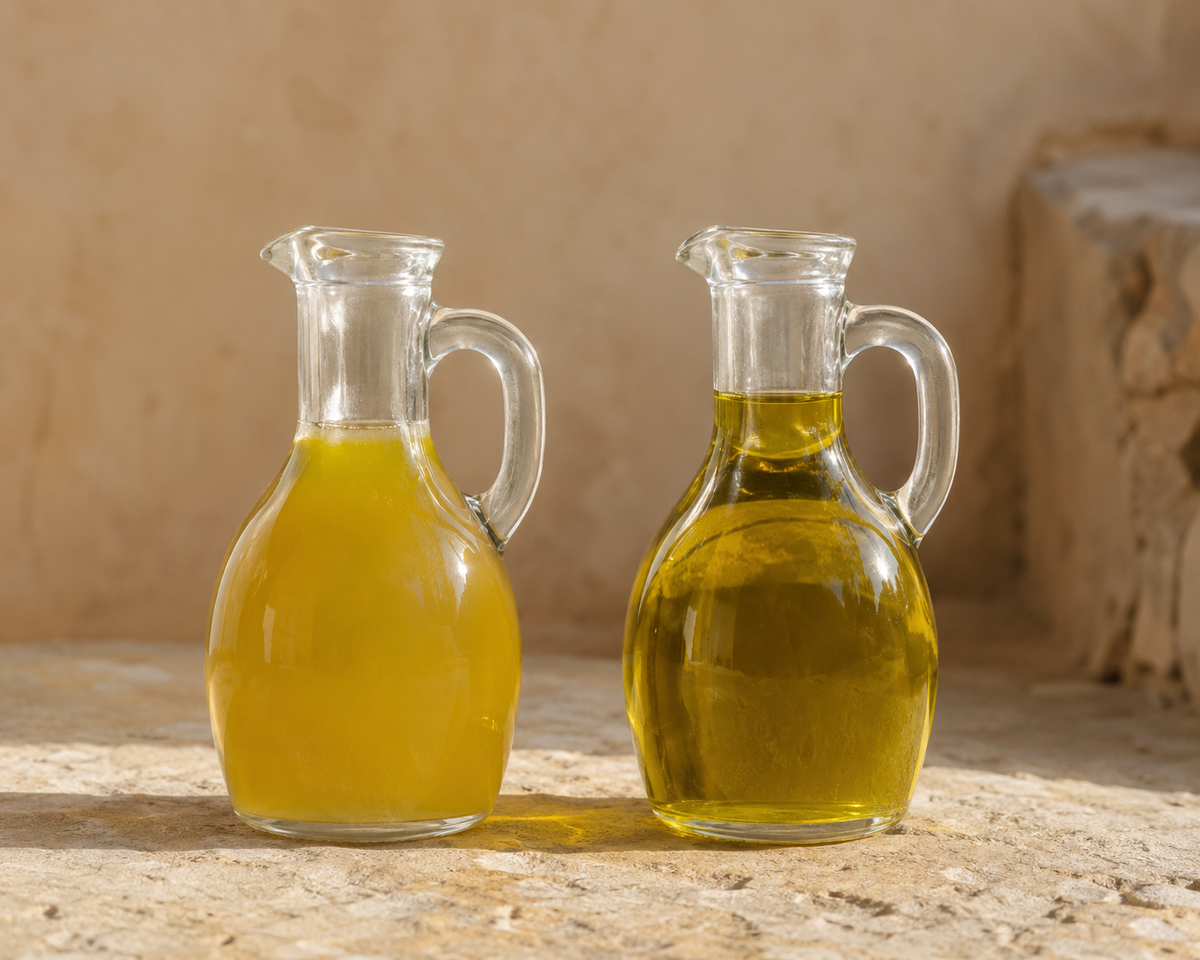
We get this question regularly. Sometimes as a genuine question, sometimes as a preference. The assumption is understandable: unfiltered sounds less processed, more natural, closer to what comes out of the press. The cloudy, thick appearance reinforces this. It looks like something that hasn't been tampered with.
In most food categories, less processing does mean more character. Unfiltered beer, natural wine, raw honey. The instinct carries. With olive oil, it doesn't. Unfiltered olive oil degrades faster than filtered, and the things it loses first are the things that make a good oil worth buying.
TL;DR
Unfiltered olive oil retains residual water and fruit sediment that accelerate oxidation. The oil loses its polyphenols, flavour and health properties faster than a filtered equivalent. Filtering is a mechanical process that removes water and particles. It does not remove polyphenols, flavour compounds or anything else you are paying for. Unless you are consuming the oil within days of pressing, straight from the mill, filtered is the better choice.
What "unfiltered" means
When olives are pressed, the resulting oil contains small amounts of water and fine particles of olive fruit. Filtering removes these mechanically. No chemicals, no heat, nothing added or subtracted beyond the water and sediment. The oil itself — its fats, polyphenols, aroma compounds — passes through unchanged.
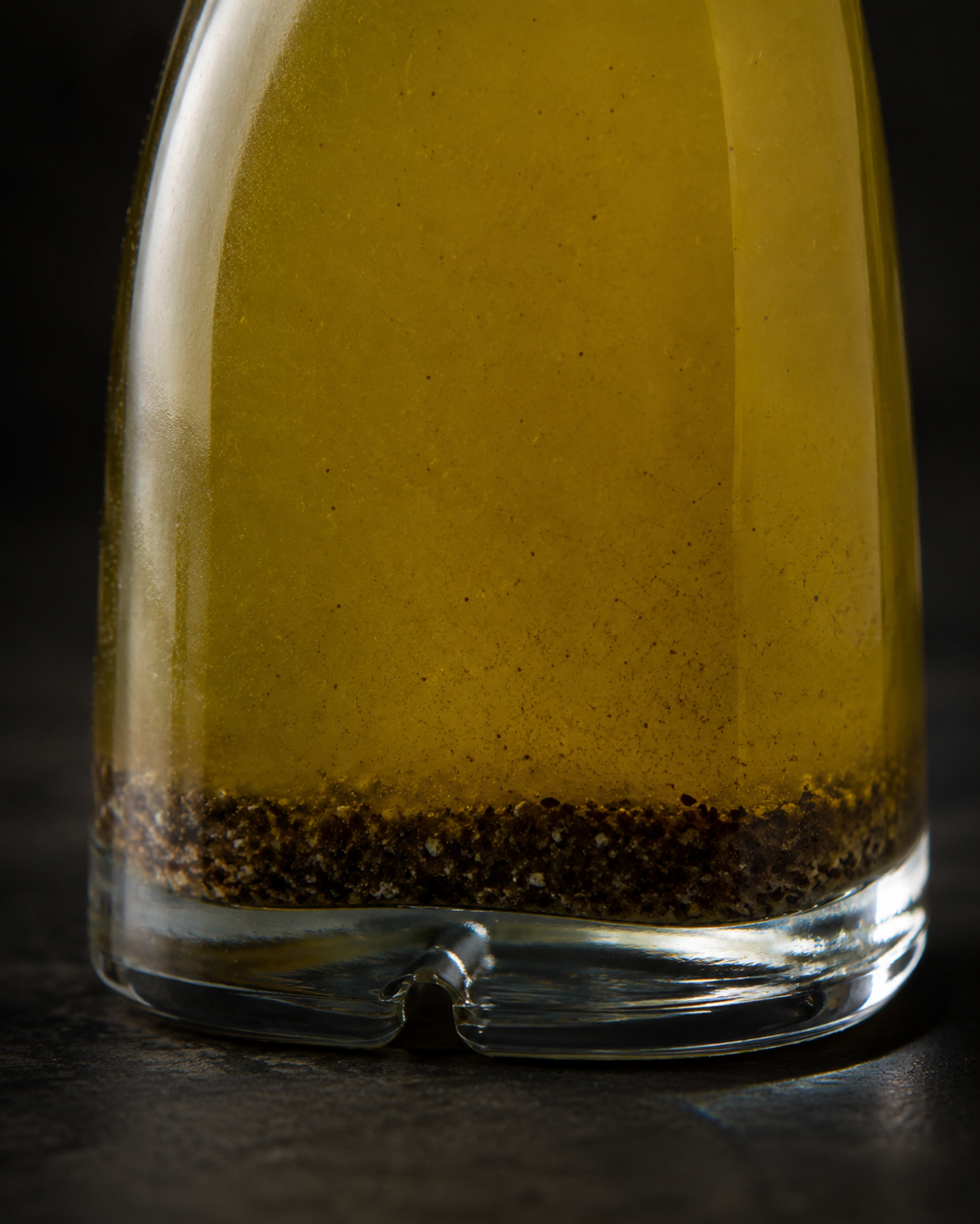
Unfiltered oil skips this step. The water and particles remain. That is what produces the cloudy appearance.
What happens to unfiltered oil over time
The fruit particles and residual water in unfiltered oil are biologically active. They contain enzymes and moisture that accelerate oxidation, the chemical process that degrades olive oil over time. Oxygen reacts with the compounds that give the oil its character — the same process that turns a cut apple brown.
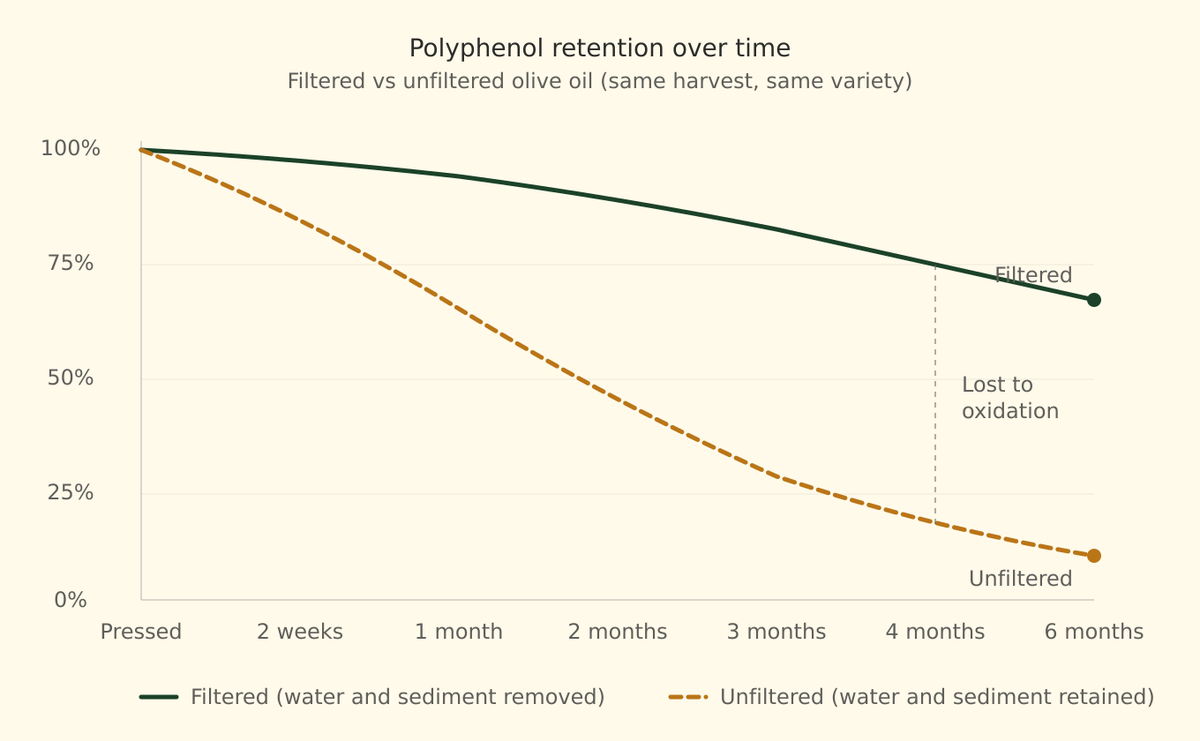
All olive oil oxidises eventually. Unfiltered oil does so considerably faster. The sediment that settles at the bottom of the bottle ferments. The residual water creates micro-environments where degradation compounds accumulate. Over weeks and months, an unfiltered oil loses a meaningful share of its polyphenol content and flavour complexity.
Polyphenols — the compounds responsible for the bitterness, the peppery throat catch, and most of the health properties associated with olive oil — are what oxidation attacks first. They are also the reason most people seek out a high-quality oil in the first place. An unfiltered oil that started with impressive polyphenol numbers can lose a significant portion of them before the bottle is half empty.
When unfiltered oil makes sense
At the mill, during harvest season, consumed within days. Freshly pressed unfiltered oil — olio nuovo — is a genuine experience. It is thick, vivid, and intensely flavourful in a way that even a well-made filtered oil does not fully replicate.
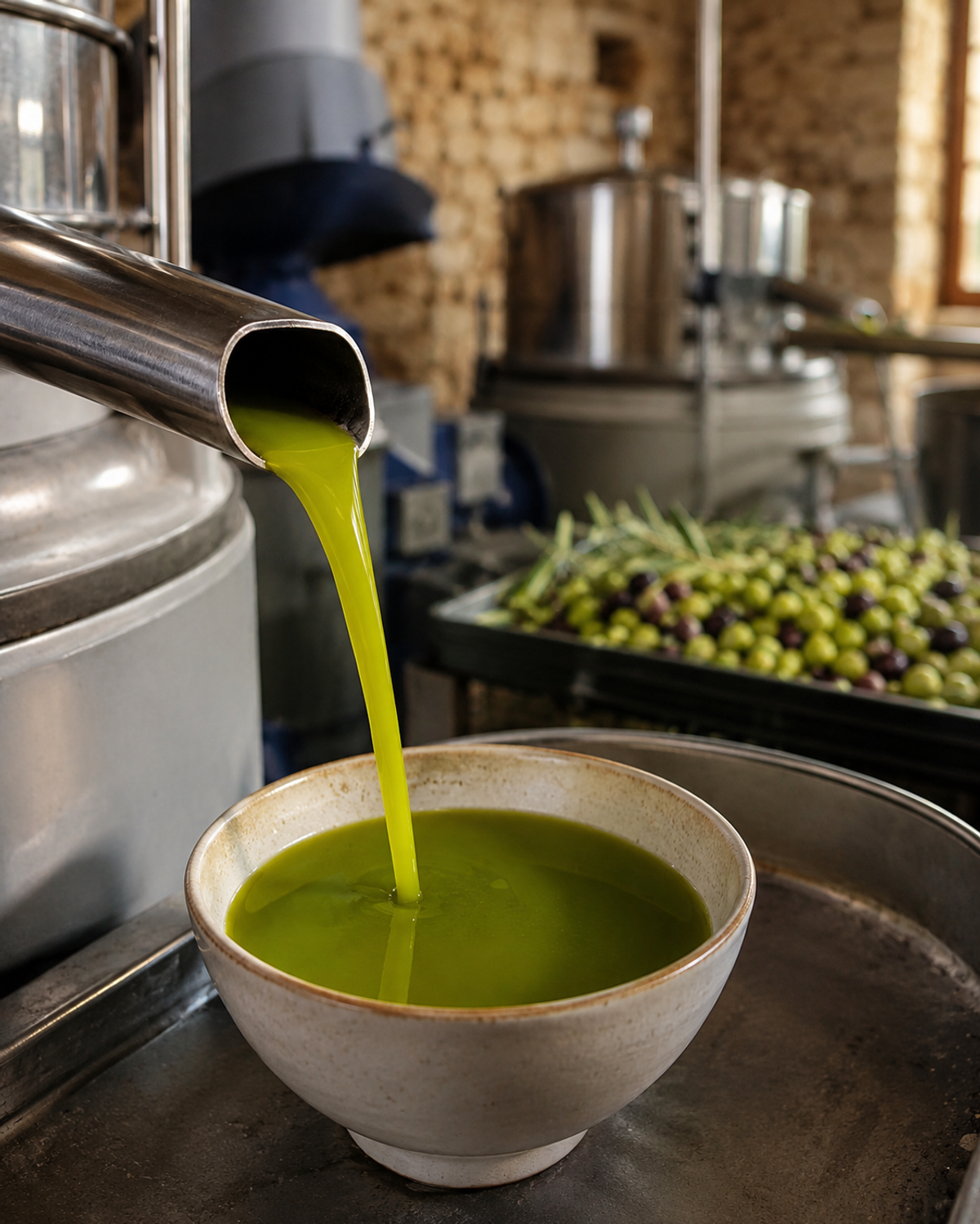
But that is a seasonal moment, not a retail product. It does not survive the weeks of shipping, the months on a shelf, the time between opening a bottle and finishing it. If you are not at or near the mill during pressing, you are not getting the experience that makes unfiltered oil worth seeking out. You are getting an oil that is actively degrading faster than the filtered alternative.
Why Attimo oils are filtered
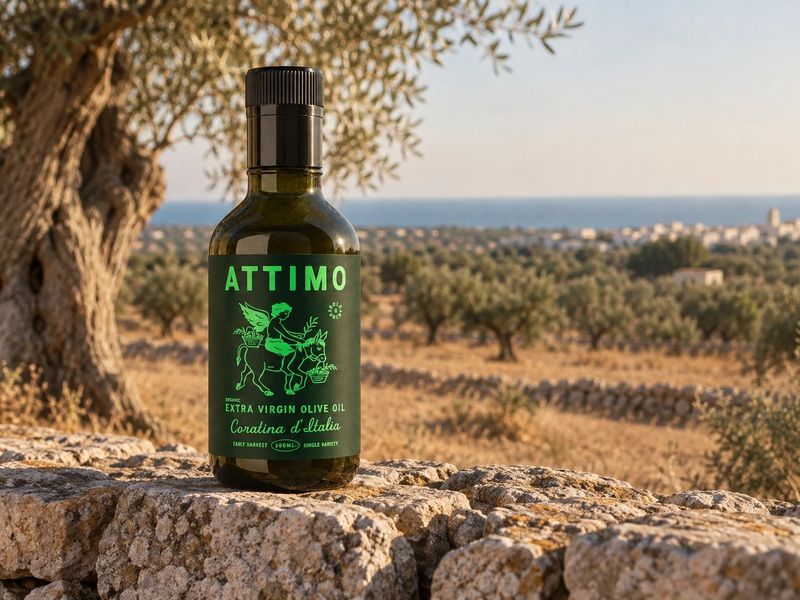
Our olive oil is early-harvest, single-variety with high polyphenol content. We want that quality to hold over the full life of the bottle. We always bottle from the most recent harvest and we want the oil to perform in June the way it performed in December.
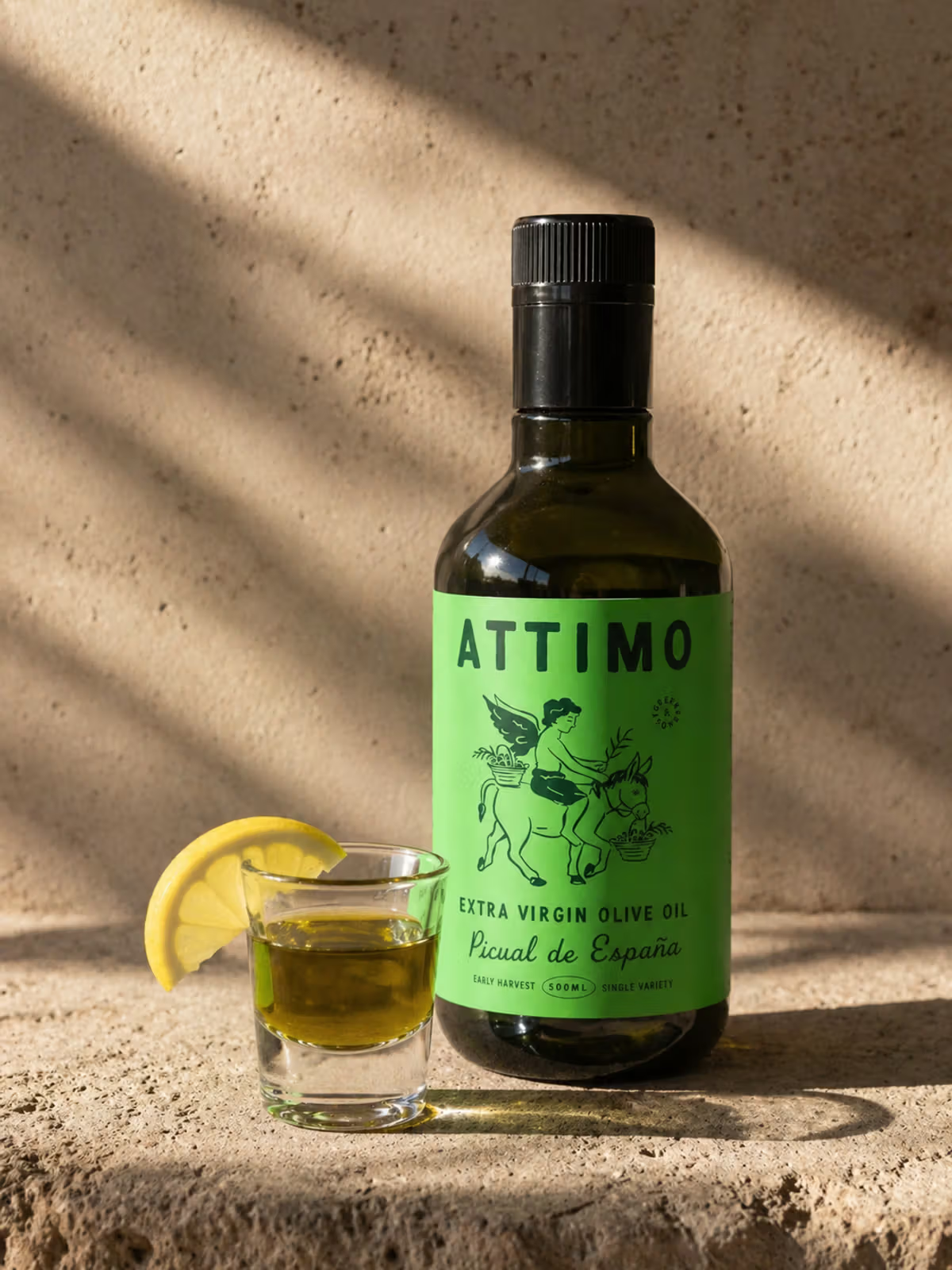
Filtering removes the water and sediment that would undermine this. The polyphenols remain. The flavour remains. The freshness holds for months longer than it otherwise would. Nothing that makes the oil worth buying is lost in the process.
What to look for instead
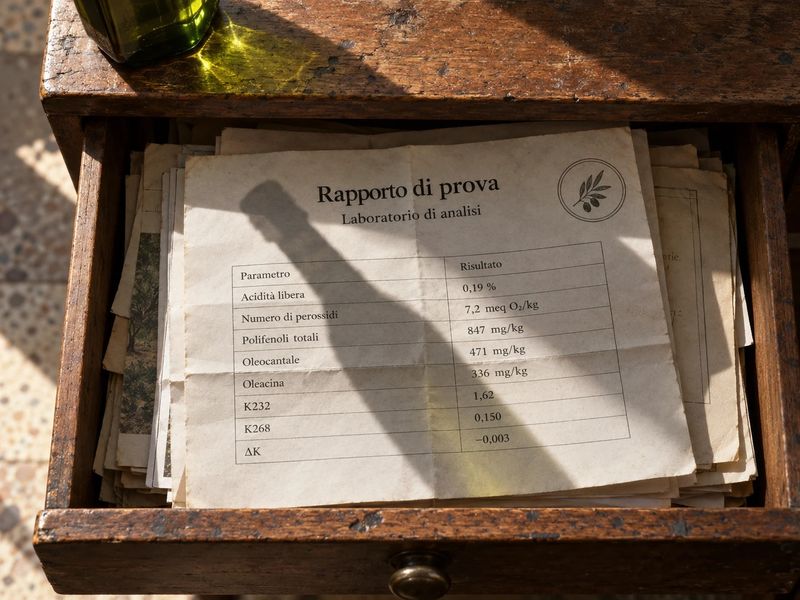
The instinct behind wanting unfiltered oil is a good one. You want something genuine, close to the source, not stripped of what matters. But cloudiness is not a reliable signal of quality. What matters is harvest date, variety, polyphenol content and producer transparency. A filtered, early-harvest oil from the current crop, with a lab-verified polyphenol count, will outperform an unfiltered oil on every dimension that matters: flavour, health and shelf life.
FAQ
Does filtering remove polyphenols or flavour from olive oil? No. Filtering is a mechanical process that removes water and fruit particles. The oil's fats, polyphenols and aroma compounds pass through unchanged.
Why does unfiltered olive oil look cloudy? The cloudiness comes from residual water and tiny particles of olive fruit that remain in the oil after pressing. These are what filtering removes.
How fast does unfiltered olive oil degrade? It depends on storage conditions, but unfiltered oil can lose a meaningful share of its polyphenol content within weeks to months. The same oil filtered would retain those compounds for significantly longer.
Is olio nuovo the same as unfiltered olive oil? Olio nuovo is freshly pressed, unfiltered oil consumed within days of pressing, typically at or near the mill during harvest season. It is a seasonal experience, not a retail product. Bottled unfiltered oil sold months later is not olio nuovo.
Can I tell if my olive oil is filtered or unfiltered? Usually yes. Unfiltered oil is visibly cloudy or hazy, and may have sediment at the bottom of the bottle. Filtered oil is clear and translucent. Some labels state it explicitly.
Why do some producers sell unfiltered oil as premium? Because it looks artisanal and the "unfiltered" label implies less processing, which consumers associate with higher quality. In most food categories that instinct is correct. With olive oil, the retained sediment and water actively degrade the product.
Filtering protects polyphenols — it doesn't create them
A common mix-up worth clearing up: filtering has nothing to do with how high an oil's polyphenols are. That ceiling is set earlier — by variety, harvest timing and freshness. A late-harvest supermarket oil doesn't become high-polyphenol by being filtered or unfiltered; it was low the day it was pressed.
What filtering does is preserve what's there: by removing the water and sediment that drive oxidation, a filtered high-polyphenol oil holds its numbers far longer than the unfiltered version of the same oil. So the order is simple — buy high-polyphenol first, then prefer it filtered. For how those numbers are set, see our complete guide to high-polyphenol olive oil.