Most kitchens have one: a bottle of olive oil at the back of the cupboard, half full, best-before date still a year away.
That oil is probably still safe to use. It is probably also past its best: much of its flavour has faded, and so have many of its polyphenols, the compounds behind olive oil's bitterness and most of its health value.
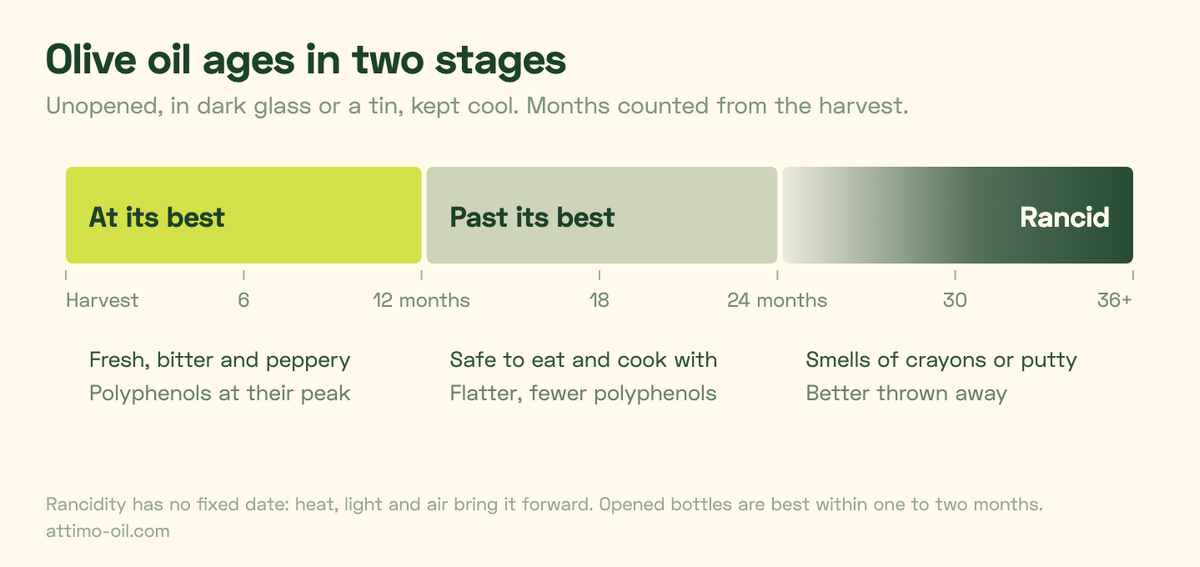
Olive oil ages in two stages. First it goes past its best: its fresh taste fades, and so do its polyphenols. The oil is flatter, but it is still safe to eat and fine to cook with. Much later it goes bad: the fat itself turns rancid, and the oil smells of crayons or putty. Rancid oil is better thrown away.
The best-before date marks neither stage. It is counted from the day the oil was bottled, so an oil can be past its best long before that date and still usable well after it.
TL;DR
- Olive oil goes past its best long before it goes bad. From the day it is pressed it loses flavour and polyphenols (the compounds behind its bitterness and most of its health value), while staying safe to eat.
- Gone bad means rancid: the fat itself has broken down. Rancid oil will not make you ill the way spoiled milk can, but it smells of crayons or putty and tastes greasy.
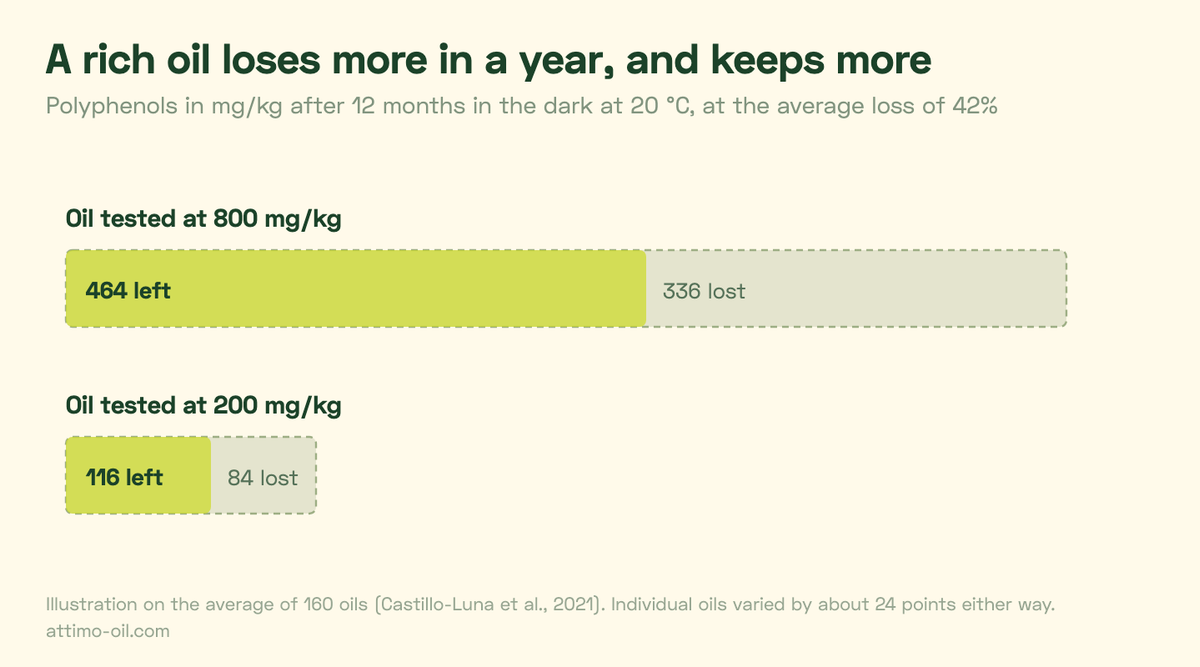
- Kept in the dark at 20 °C, extra virgin olive oil loses about 42% of its polyphenols in its first year, on average across 160 oils. An oil that starts richer loses more in milligrams and still ends the year with more.
- Unopened, in dark glass or a tin, kept cool: best within about 12 months of the harvest, still usable to about 18–24 months.
- Opened: best within one to two months.
- The best-before date is counted from bottling, so it marks neither stage. The harvest date is the one that tells you how old the oil is.
- Rancid oil smells of crayons, putty or old walnuts, and tastes greasy with no bitterness or pepper.
- Oil past its best is still fine for cooking. Rancid oil is better thrown away.
- Store it dark, cool and closed. The fridge does not help.
Olive oil goes past its best long before it goes bad
Olive oil ages in two stages: first it goes past its best, then, much later, it turns rancid.
Olive oil is pressed fruit juice. Once filtered, it has no living cells, no sugars and almost no water, so bacteria and mould have very little to grow on. That is why it does not spoil in the way milk, bread or fresh juice do. Unfiltered oil is the exception: its bits of fruit can ferment in the bottle.
What happens instead is oxidation: oxygen slowly reacts with the fat. Light and heat speed the reaction up. Olive oil has three enemies: light, oxygen and heat.
Past its best: the fresh aromas fade first (cut grass, tomato leaf, green almond). The bitterness and the peppery sting at the back of the throat soften as the polyphenols are used up. The oil is still safe and still pleasant, but flatter.
Rancid: once the oil's own antioxidants are used up, the fat itself breaks down. The smell turns waxy and sour, and the taste turns greasy. This is the point where olive oil has gone bad.
Polyphenols protect the oil, and get used up doing it
The bitterness and pepper in fresh olive oil come from polyphenols, the compounds behind most of its health value. They are also the oil's natural antioxidants.
In the bottle, polyphenols react with oxygen before the fat does. They protect the oil by being consumed. So an oil that starts with a lot of them stays at its best for longer, and an oil that starts with few fades faster.
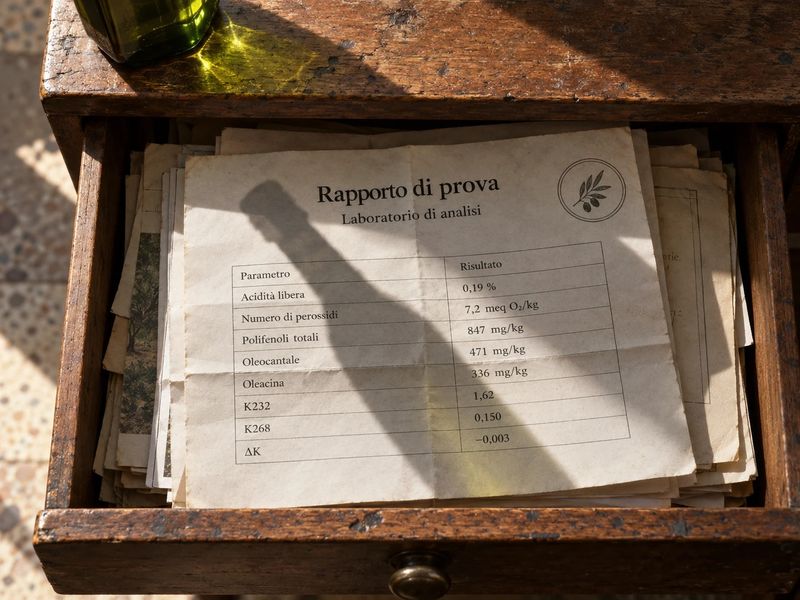
The polyphenol number on a lab report describes the oil on the day it was tested. Months later, the same bottle contains less. In a study of 160 extra virgin olive oils kept in the dark at 20 °C, polyphenols fell by 42% on average over 12 months. The loss varied a lot from oil to oil, and oils dominated by oleocanthal and oleacein lost a larger share than oils rich in other polyphenols.
Starting high still pays. In a 22-month study of 14 oils stored in the dark, the oils that started richest in polyphenols kept their sensory and health-related qualities best; the poorest lost 98% of their main polyphenols.
A rich oil also loses more in absolute terms, and still ends up with more. At the average loss of 42%, an oil tested at 800 mg/kg drops by about 340 mg/kg in a year and still holds about 460. An oil tested at 200 drops by about 85 and holds about 115.
The individual compounds change too. As oleacein and oleocanthal break down, simpler compounds build up: hydroxytyrosol and oleocanthalic acid rise as an oil ages, which is how a lab can tell an old oil from a fresh one.
How long olive oil lasts
Unopened and stored well, olive oil stays at its best for about 12 months from the harvest. After that it is past its best but usually still usable, up to about 18–24 months. Once opened, it is best used within one to two months.
| Storage | Best within | Still usable to |
|---|---|---|
| Unopened, dark glass or tin, cool cupboard | 12 months from harvest | 18–24 months from harvest |
| Unopened, clear bottle or near the stove | Noticeably shorter | Check by smell |
| Opened, cap closed, cool cupboard | 1–2 months | About 3–4 months |
| Opened, near the stove or cap left loose | Weeks | Check by smell |
Bottle size matters too. Every time you pour, air replaces the oil you took out, so the emptier the bottle, the more oxygen sits on the oil. A 500 ml bottle you finish in a month keeps better than a litre you finish in three.
The best-before date counts from bottling
A date far in the future feels reassuring, but the best-before is counted from the bottling date. It says nothing about the oil's freshness. Producers add a fixed window, usually 18 to 24 months, to the day they bottle. And bottling can happen long after pressing, or pool several harvests, so a bottle can carry a comfortable best-before while the oil inside is already old.
The date that tracks the oil's age is the harvest date. In the EU, a producer who prints a harvest date must guarantee that every drop in the bottle comes from that harvest, so oil blended from several harvests can't carry one.
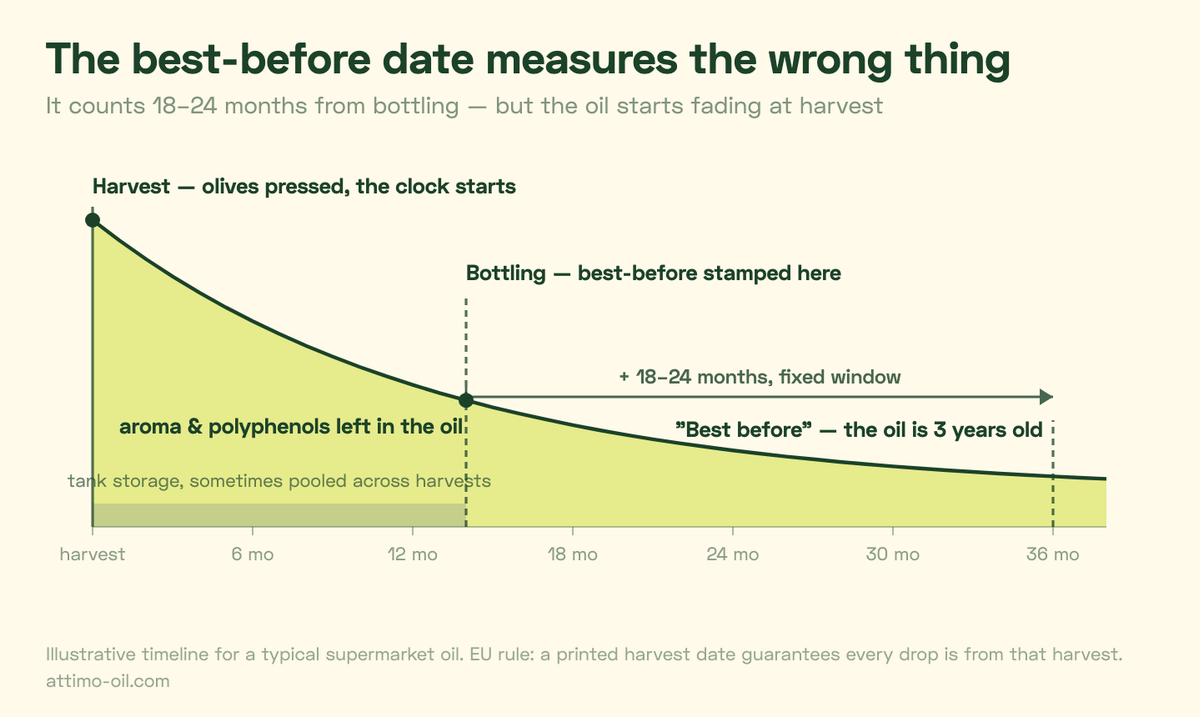
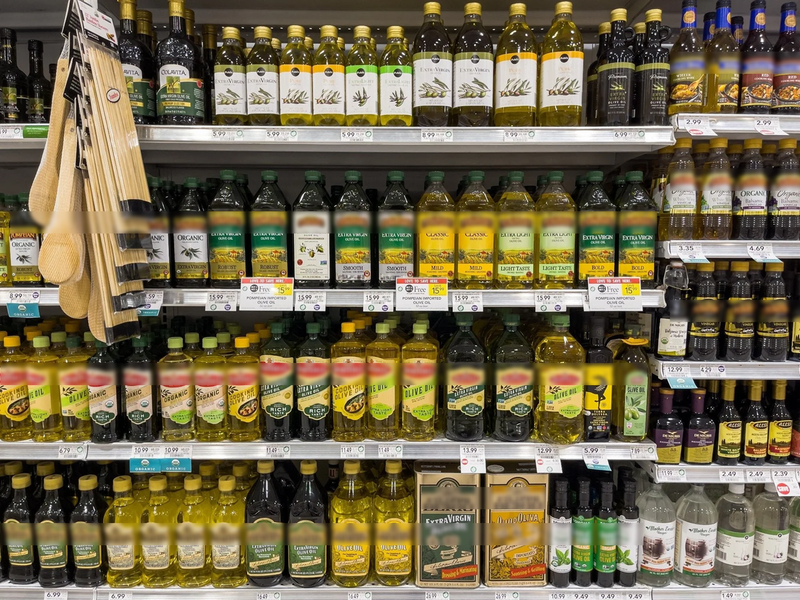
So when you compare two bottles on a shelf, ignore the best-before and look for the harvest. A bottle without one is likely older than it looks.
How to tell if olive oil has gone bad
Pour a little into a glass or a spoon and smell it.
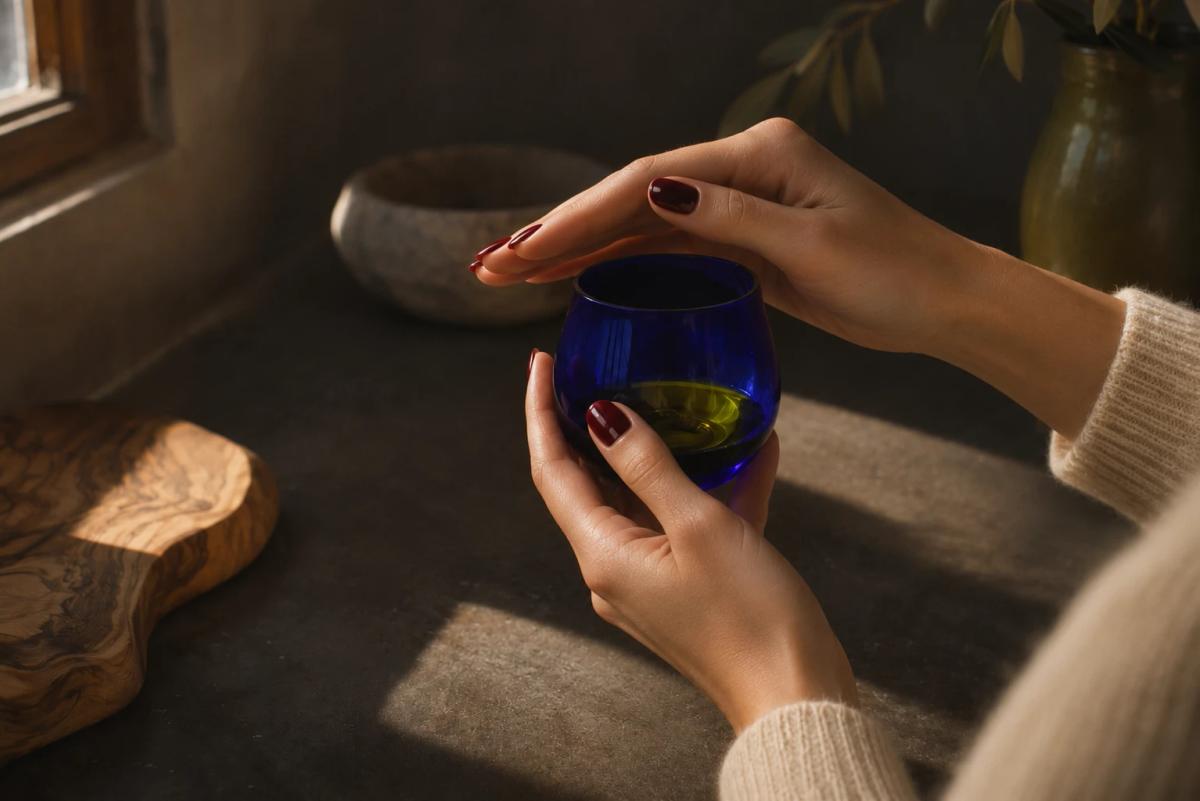
- Fresh: green, fruity, grassy. In a good early-harvest oil, a sting at the back of the throat when you swallow.
- Past its best: faint or neutral. Not unpleasant, but nothing there.
- Rancid: crayons, putty, play dough, old walnuts or stale crisps. Greasy on the tongue with no bitterness.
Colour tells you little about age. The green comes mostly from the variety and the ripeness of the olives, so a green oil can be old and a golden one fresh.
Can you use olive oil past its best?
Yes. Olive oil past its best is safe to eat and fine for cooking. The aroma it has lost would mostly fade in the pan anyway. The loss shows when you use it raw, on a salad or bread, where flavour and polyphenols are the point.
Rancid oil is better thrown away. A spoonful will not harm you, but it gives food a stale, waxy taste.
How to store olive oil
- Dark: keep it in dark glass or a tin, inside a cupboard.
- Cool: room temperature or a little below, away from the hob and the oven.
- Closed: put the cap back on straight after pouring.
- Small: buy a bottle you will finish in four to eight weeks.
The fridge does not help. Cold doesn't harm the oil directly, but it thickens it into an unpourable sludge, and the in-and-out cycles can draw condensation into the bottle, which does harm it. A dark cupboard achieves the same protection without the drawbacks.
Why we only sell one harvest at a time
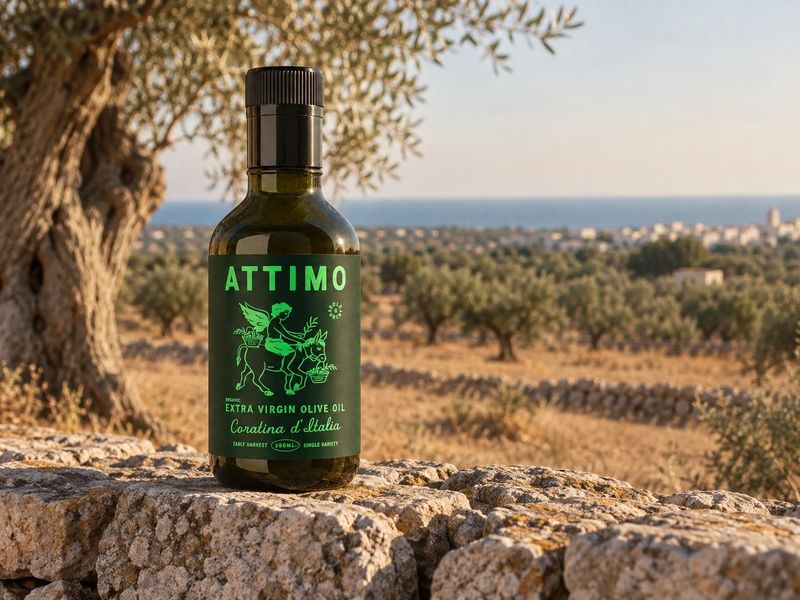
ATTIMO sells the current harvest only. When it runs out, we wait for the next one. The harvest is printed on every bottle, and the lab analysis for each oil is on our certificate pages: polyphenols, oleocanthal and oleacein, tested at an ISO/IEC 17025 accredited laboratory.
Each new harvest is announced on our new-harvest page.
FAQ
Can you use olive oil after the best-before date?
Usually yes. The best-before date is counted from bottling, so it says little about the oil's age. An oil past that date is likely past its best, but it has only gone bad if it smells of crayons or putty.
Is old olive oil safe to eat?
Yes. Olive oil past its best is safe; it has lost flavour and polyphenols. Rancid oil will not make you ill from a spoonful either, but it tastes stale and greasy, so it is better thrown away.
How long does olive oil last once opened?
Best within one to two months, kept closed in a cool, dark cupboard. After that it fades faster because of the air in the bottle.
Does olive oil need to be refrigerated?
No. A dark cupboard at room temperature protects it as well, and the fridge turns it cloudy and thick.
What does rancid olive oil smell like?
Crayons, putty, play dough, old walnuts or stale crisps. It tastes greasy, with none of the bitterness or pepper of fresh oil.
Does high-polyphenol olive oil last longer?
Yes. Polyphenols are the oil's own antioxidants and are used up protecting it, so an oil that starts with more of them stays at its best longer. It still loses a large share in its first year, which is why the harvest date matters for every oil.
Does extra virgin olive oil last longer than refined olive oil?
Refined oil has had most of its flavour and polyphenols removed, so its ageing is harder to taste. It also has almost none of the polyphenols that slow oxidation down. Extra virgin changes more in flavour because it has more in it to begin with.
Is cloudy olive oil bad?
Not by itself. Cloudiness comes from cold, which makes the oil set, or from fine fruit particles in unfiltered oil. Neither is a sign of age, but unfiltered oil spoils sooner because those particles can ferment.
Sources
- Castillo-Luna A, et al. The decrease in the health benefits of extra virgin olive oil during storage is conditioned by the initial phenolic profile. Food Chemistry 2021;336:127730. https://doi.org/10.1016/j.foodchem.2020.127730
- Esposto S, et al. Quality evolution of extra-virgin olive oils according to their chemical composition during 22 months of storage under dark conditions. Food Chemistry 2020;311:126044. https://doi.org/10.1016/j.foodchem.2019.126044
- Commission Implementing Regulation (EU) No 29/2012 on marketing standards for olive oil, article 5. https://eur-lex.europa.eu/eli/reg_impl/2012/29/oj